Tuesday, 27 February 2018

Australia’s prime minister hopes a new deputy will restore stability

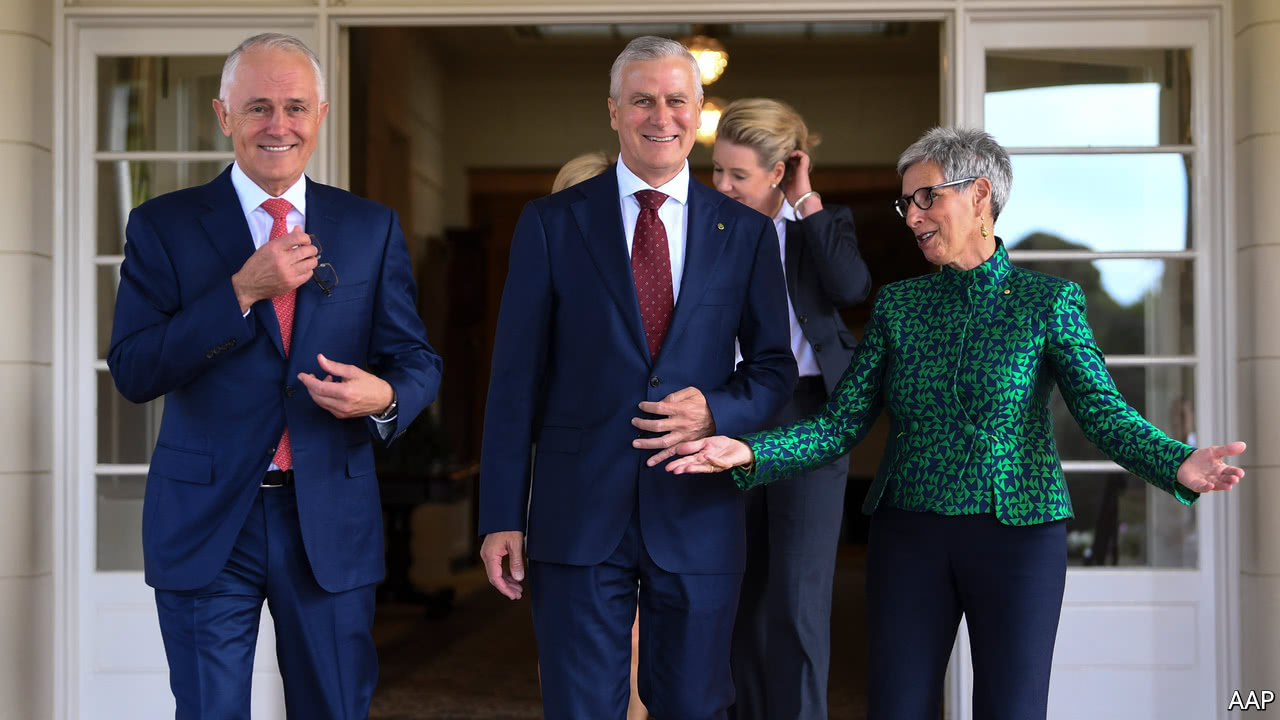
MALCOLM TURNBULL, Australia’s prime minister, looked relieved when on February 26th the junior party in his coalition, the Nationals, elected Michael McCormack (picured centre) as its new leader and thus deputy prime minister. For almost three weeks Mr Turnbull had endured a festering embarrassment after the press reported an affair between Barnaby Joyce, the previous Nationals leader, and his former press secretary, who is now pregnant. Mr Joyce had at first refused to resign as party leader, despite being caught flouting his own talk of family values. His long goodbye exposed tensions in the coalition, just as Mr Turnbull was trying to revive its fortunes ahead of an election due next year.

Leaders of the Nationals have mostly been restrained and unobtrusive. Mr Joyce proved an aberration. As a minister three years ago, he rowed publicly with Johnny Depp, an American actor, who had brought two dogs into Australia without the right paperwork. Last year Mr Joyce had to quit parliament...Continue reading

from Asia http://ift.tt/2GQwvut
via https://ifttt.com/ IFTTT

AIA Is an Insurer to Back in China

Hong Kong-based AIA’s earnings surged last year thanks to its rapid growth in mainland China.

from WSJ.com: Markets http://ift.tt/2sYmsRM
via https://ifttt.com/ IFTTT

Refugees tortured in Syria are seeking redress in German courts

Scene of the crimes

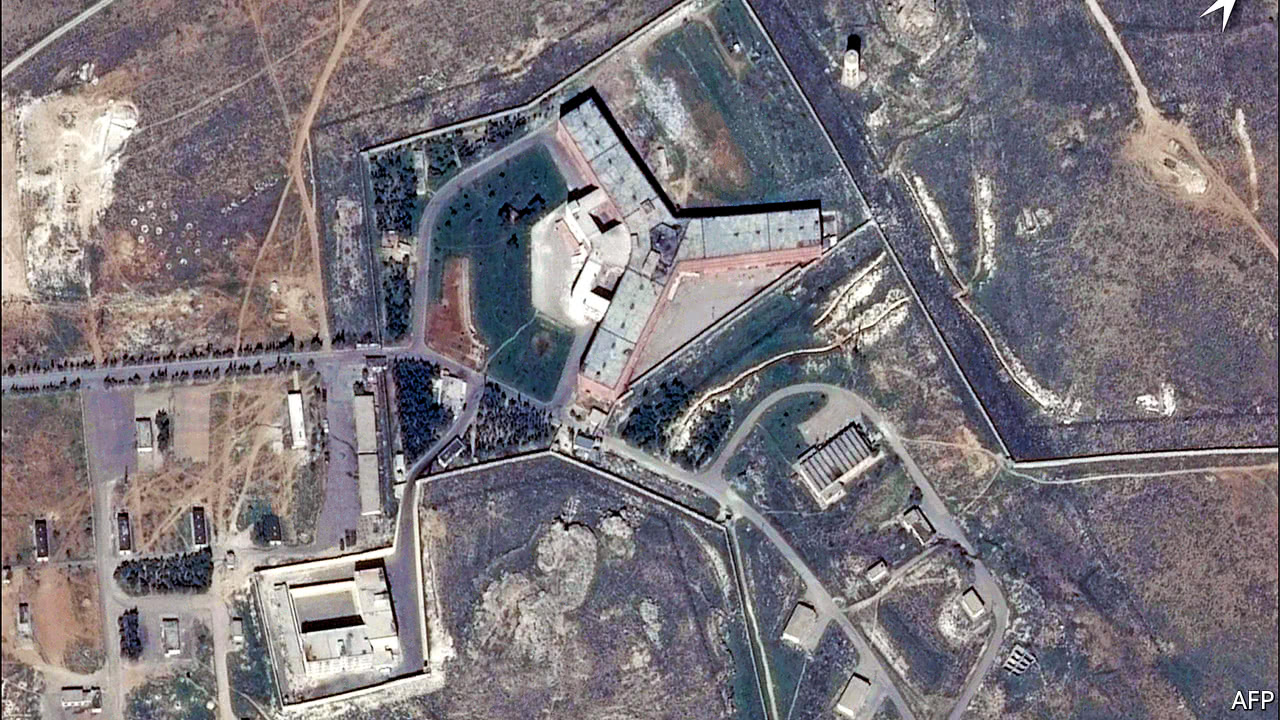
SHAPPAL IBRAHIM knew they were coming for him. As soon as the Syrian security forces began repressing anti-government protests he had helped to organise in the spring of 2011, the Kurdish activist went underground. But the goons soon caught up with him. What followed was nearly two years of horror, most of it in Saydnaya, a notorious military prison outside Damascus. “They made me stand naked in my cell for hours, beat me and tortured me with electric shocks,” he says. “There was never enough to eat, and only three or four hours of sleep a night.”

Unlike countless others, Mr Ibrahim made it out: he was released as part of an amnesty in May 2013 and fled to Germany via Iraqi Kurdistan. Along with other Syrians who suffered a similar fate, he has now offered to testify to the office of Germany’s federal prosecutor in Karlsruhe, in the hope that his torturers will one day face justice in German courts. Working with the European Centre for...Continue reading

from Europe http://ift.tt/2GLdQAa
via https://ifttt.com/ IFTTT

On the world’s deepest lake, something new: Russian eco-activists

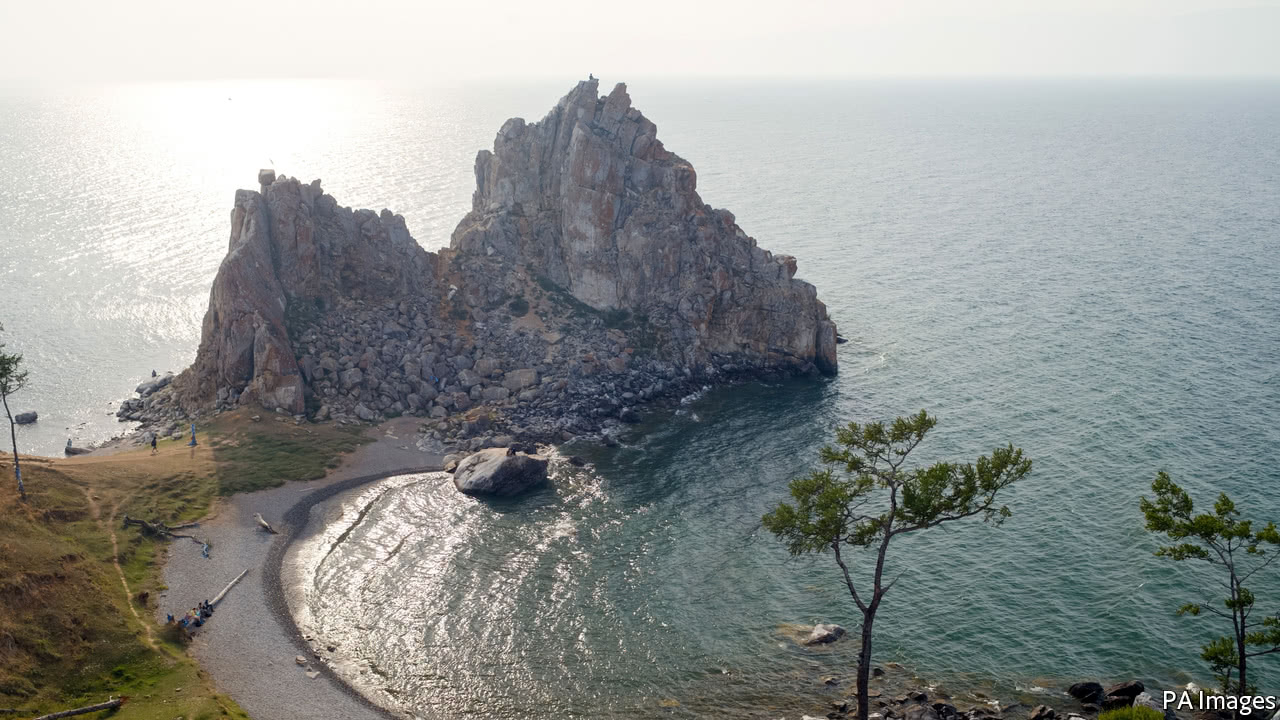
ON AN early winter morning, with temperatures below –20ºC and a fierce wind whipping off the water, Vasily Sutula, the stern, moustachioed director of a nature reserve on the shores of Lake Baikal, happily surveyed a dozen young volunteers. The youngsters declared the day dubak, slang for a freeze deeper than the standard Russian word for cold, kholod, can convey. Yet they had come to work nonetheless. Coats zipped, they set off for the forest to clear dead trees.

The volunteers’ presence is just one small sign of shifting tides in the battle for Baikal, which holds a fifth of the world’s unfrozen fresh water. Environmentalists won a big victory with the closure in 2013 of the Baikal Pulp and Paper Mill (BPPM), a belching behemoth that had dirtied the waters for decades. Yet even as the pollution from the mill has waned, tourist flows have waxed, creating new pressures on an ecosystem that UNESCO warns is “under significant...Continue reading

from Europe http://ift.tt/2HOt4G3
via https://ifttt.com/ IFTTT

The European Commission’s odd way of picking its president

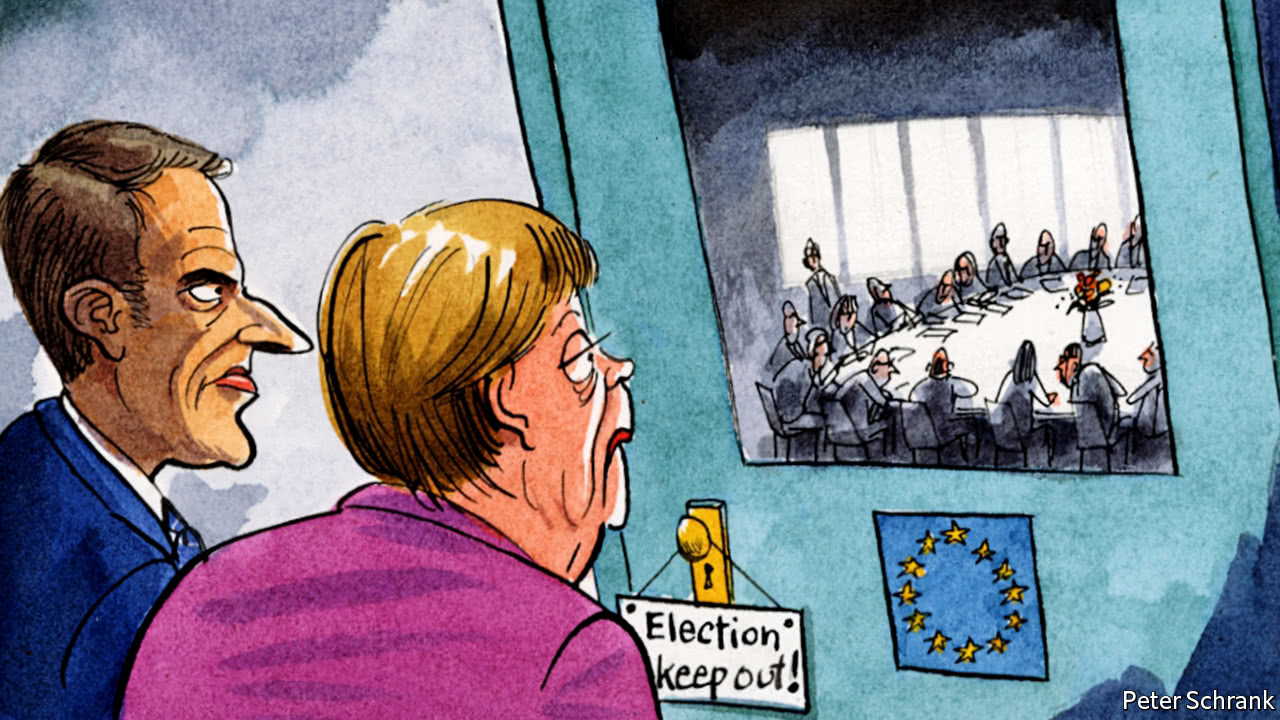
WHAT is the best way to enrage a European diplomat? (This is not an attempt at a joke.) You could suggest that his or her government pay more into the European Union budget, or accept a diktat from Brussels to take in more refugees. Urging a speedier cut in national budget deficits rankles in some countries; pressing for more defence spending irritates others. But this week, at least, the most reliable method for inducing puce-faced rage in the Brussels diplomatic corps has been to utter the word Spitzenkandidaten. It falls upon them like a curse.

This frightening-sounding German word translates as “top candidates”, and refers to a method of choosing the president of the European Commission, perhaps the most powerful job in the Brussels firmament. It works like this. Before the election to the European Parliament, the chamber’s political groupings—agglomerations of national parties from across the EU—each nominates a candidate for the commission post. They agree...Continue reading

from Europe http://ift.tt/2GP3Bef
via https://ifttt.com/ IFTTT

Why 35% of French people cannot name their own prime minister

SEVEN months after their prime minister was appointed in May 2017, fully 35% of the French could not name him accurately in a poll. Next to the hyper-visible President Emmanuel Macron, who hosts global business chiefs at the Palace of Versailles one week and is on the phone every other to Donald Trump, the tall, bearded Edouard Philippe cuts a discreet figure. So much so that he is variously identified in polls as Philippe Edouard, Gérard Philipe (a former actor), or Louis Philippe (a former king). Confusion about Mr Philippe’s name, though, prompts a bigger question: what is the point of him?

France is unusual in having a two-headed executive, devised by Charles de Gaulle in 1958 when the previous parliamentary system had proved unstable. The Fifth Republic’s constitution established a particularly strong executive presidency. But according to precedent the president is meant to stick to big visions and foreign affairs, leaving the prime minister, whom he names, to deal with the grind of daily...Continue reading

from Europe http://ift.tt/2HNk18h
via https://ifttt.com/ IFTTT

China’s leader, Xi Jinping, will be allowed to reign forever


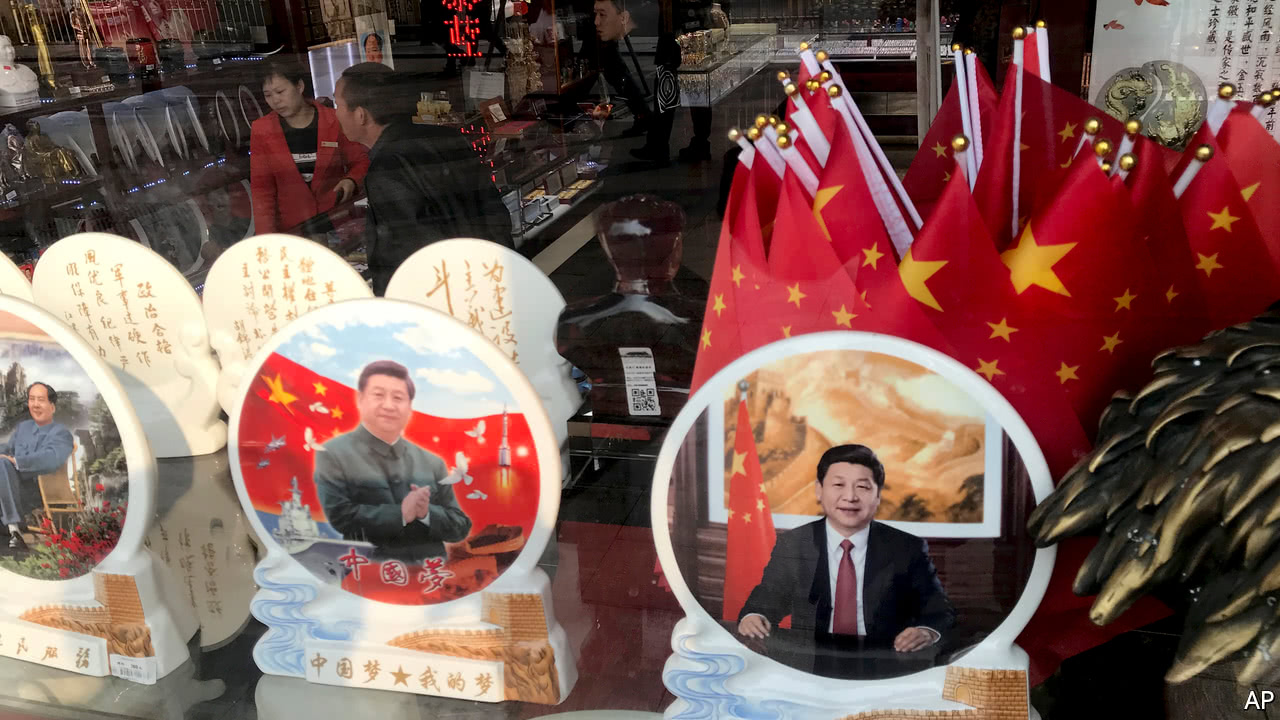
THE decision announced on February 25th to scrap term limits for China’s president, Xi Jinping, pierces the veil of Chinese politics. It reveals that, at a time when the ruling Communist Party is presenting China to the world as a modern, reliable and responsible state, capable of defending globalisation, the internal political system that the party monopolises is premodern, treacherous, inward-looking and brutal. It also shows that Chinese leaders’ own attempts to make the party otherwise have not got far.

Those attempts began in the 1980s under Deng Xiaoping, then the country’s paramount leader. In order to encourage predictability and institutional stability after the chaos of the last years of Mao Zedong, Deng introduced a series of reforms which stressed rules and norms, instead of strongman decision-making. The reforms included mandatory retirement ages and term limits for high-ranking politicians. The constitution of 1982 says the president “shall serve no...Continue reading

from Asia http://ift.tt/2FaGAF8
via https://ifttt.com/ IFTTT

Monday, 26 February 2018

Filling the Toys 'R' Us Void

As Toys ‘R’ Us closes more stores, other retailers have an opportunity to seize market share.

from WSJ.com: Markets http://ift.tt/2HNEoCj
via https://ifttt.com/ IFTTT

For $9 Billion, Chinese Automotive Tycoon Gets Tangle of Relationships

Chinese billionaire Li Shufu has acquired a 9.7% stake in Daimler and is calling for more cooperation in the car industry. But he may struggle to get more than big dividends from Mercedes-Benz.

from WSJ.com: Markets http://ift.tt/2owIsOg
via https://ifttt.com/ IFTTT

Who Will Be Called On to Clean Up the Anbang Mess?

Now that Chinese regulators have seized cash-starved Anbang Insurance, it may be up to private companies to get behind a rescue.

from WSJ.com: Markets http://ift.tt/2oyFxVs
via https://ifttt.com/ IFTTT

The Other Risk From Rising Wages

If higher labor costs don’t cause inflation, it means they probably will cut profit margins, hurting profits and share prices.

from WSJ.com: Markets http://ift.tt/2sZaLue
via https://ifttt.com/ IFTTT

Duelling Democratic and Republican memos are bugle-toots on a battlefield

What Investors Are Missing in Junk Bonds

The high-yield market has gotten more diversified but many investors are stuck with old, U.S.-heavy indexes.

from WSJ.com: Markets http://ift.tt/2BQFQmC
via https://ifttt.com/ IFTTT

Have We Seen Peak Prices for Smartphones?

When it comes to smartphones, upselling may have found its limit.

from WSJ.com: Markets http://ift.tt/2sTblcN
via https://ifttt.com/ IFTTT

Saturday, 24 February 2018

Hidden Profits In the Prescription Drug Supply Chain

Depending on how you look at them, pharmacy-benefit managers are either low-margin middlemen that fight to reduce drug costs, or highly profitable intermediaries that take a cut of every prescription and earn more when drug prices rise.

from WSJ.com: Markets http://ift.tt/2sTgykU
via https://ifttt.com/ IFTTT

Why General Mills Is Paying Up for a Dog's Breakfast

The cereal and ice cream maker needs to shift to protein and is buying Blue Buffalo Pet Products, a purveyor of high-protein, natural pet foods, to do it.

from WSJ.com: Markets http://ift.tt/2ChSYm3
via https://ifttt.com/ IFTTT

Friday, 23 February 2018

Can Eric Greitens hold on to his job?

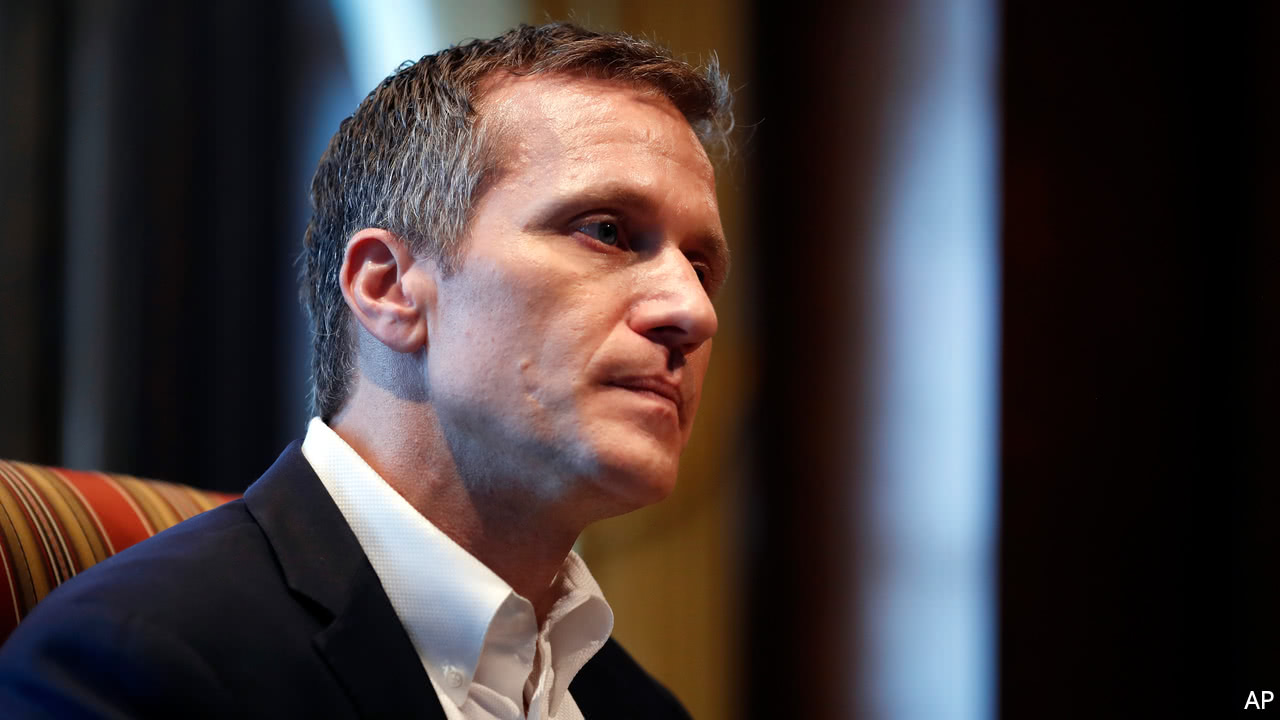
THE mugshot taken of Eric Greitens after he was taken into custody on February 22nd is not flattering. The usually photogenic Republican governor of Missouri looks drawn, his jaw grimly set. A grand jury in St Louis had just indicted him on a charge of invasion of privacy. If convicted of the felony of which he is accused, the governor will almost certainly lose his job.

The indictment relates to an extramarital affair that Mr Greitens had in 2015 with a hairdresser in St Louis. The married father of two boys admits to the affair, but firmly rejects an allegation that he threatened to blackmail his lover by taking a compromising photograph of her while she was blindfolded in his basement. The indictment states otherwise. “The defendant knowingly photographed [the victim] in a state of full or partial nudity without the knowledge and consent of [the victim] and in a place where a person would have a reasonable expectation of privacy,” says the indictment. “The defendant subsequently transmitted the image contained in the photograph in a...Continue reading

from United States http://ift.tt/2CEBUlF
via https://ifttt.com/ IFTTT

Anbang and the Financialization of China's Economy

Beijing just took over China’s most notorious purveyor of dodgy wealth management products. The next phase of the debt crackdown might prove more damaging.

from WSJ.com: Markets http://ift.tt/2FouJkw
via https://ifttt.com/ IFTTT

New HPs Give Fresh Life to Old Businesses

The two companies created from the old Hewlett-Packard have surprised investors—but they still need to prove the growth is sustainable.

from WSJ.com: Markets http://ift.tt/2Fphksu
via https://ifttt.com/ IFTTT

Where Peak Optimism Has Reached Its Peak

There could be change afoot in European markets, as the reassurance of data in consistently beating expectations fades.

from WSJ.com: Markets http://ift.tt/2EQuMVu
via https://ifttt.com/ IFTTT

Who Wins From Standard Life Aberdeen-Phoenix Deal

Standard Life Aberdeen thinks shedding its insurance arm will unlock value. But what is left behind is an asset manager with high costs and investor outflows. Both need fixing, fast.

from WSJ.com: Markets http://ift.tt/2ENq7U3
via https://ifttt.com/ IFTTT

Snap, chatter and pop goes the share price

KYLIE Jenner, a model best known for being the, er, second most famous Kylie in the world, managed to cause a stir on Wall Street. With this idiosyncratic tweet

sooo does anyone else not open Snapchat any more? Or is it just me...ugh this is so sad

she knocked back the share price of Snap, the parent company of the video- and picture-sharing app. Ms Jenner’s influence in the target market is deemed to be huge; she has 24.5m Twitter followers, and her message has (at the time of writing) been retweeted 58,000 times and “liked” by 310,000. 

Snap’s share price fell 6%, reducing the company’s market value by $1.3bn. The decline was not just down to the influence of Ms Jenner, who recently gave birth to a daughter Stormi, named after the weather/porn star/grime artist. Investors were already worried about the impact of a recent app redesign. More than 1.2m people signed a petition calling for...Continue reading

from Economics http://ift.tt/2F20Nx1
via https://ifttt.com/ IFTTT

Protestantism might be good for the wallet, after all

Spirit and flesh

CAN religion make people wealthier? In 1905 Max Weber, a German sociologist, argued that it had happened in Europe. Protestants did not invent capitalism in the 16th century, he suggested. But, by discarding monastic asceticism and embracing the notion that diligence and self-improvement are pleasing to God, they became particularly good at it.

Weber’s idea is unfashionable these days, partly because so many non-Protestant countries have become rich and partly because of a cause-and-effect problem. Were Protestants truly better at business, or were ambitious, business-minded people drawn to Protestantism? One way of settling that question is through a randomised controlled trial of religion. A National Bureau of Economic Research working paper released on February 19th reports on an experiment in the Philippines that suggests Weber was onto something.

International Care Ministries (ICM), an evangelical charity, tries to help the...Continue reading

from Economics http://ift.tt/2ojtxI9
via https://ifttt.com/ IFTTT

Changing the guard at HSBC

YOU spend 38 years at a mighty global bank, the last seven as chief executive. As boss you clean up a stinking mess, the legacy of ill-conceived acquisitions and shoddy practice. You shell out billions in fines and legal costs. You shed businesses and cut jobs by a quarter. You build a solid capital base. You maintain dividends. On your last day, you announce decent results, with revenue growing after five years of shrinkage and profits up nicely. The market’s parting gift to you? The share price falls by 3%.

Analysts had expected better from Stuart Gulliver’s final report as boss of Britain’s HSBC, the world’s seventh-biggest bank by assets, on February 20th. They were surprised by charges for impaired loans to two companies, thought to be Carillion, a failed British contractor, and Steinhoff, a troubled South African retailer, and miffed that HSBC put off buying back more shares. That, the bank said, must wait until it has raised $5bn-7bn of “additional tier-1” capital...Continue reading

from Economics http://ift.tt/2orz1j1
via https://ifttt.com/ IFTTT

Japan’s central bank chooses continuity over tradition

GOVERNORS of the Bank of Japan (BoJ) tend not to linger long in their post. Twenty-two people have headed the institution since 1914, compared with 16 at the Federal Reserve and 12 at the Bank of England. The last time a BoJ governor won a second term was 1961, when Japan’s economy was growing by over 11% and inflation was over 5%. As Richard Werner, the author of “Princes of the Yen”, a history of the central bank’s failures, points out, by tradition the job alternates every five years between a candidate backed by the finance ministry and a “true-born” BoJ insider.

This tradition will be broken by the reappointment of Haruhiko Kuroda, who was nominated for a second term on February 16th. If he completes it, he will become the longest-serving governor in the BoJ’s history.

With luck that might be long enough for him to reach the central bank’s elusive inflation target of 2%, a goal set five years ago which he had hoped to meet by 2015. Although the BoJ has...Continue reading

from Economics http://ift.tt/2Cdegkp
via https://ifttt.com/ IFTTT

Donald Trump mulls restrictions on steel and aluminium imports

TEN months ago the Trump administration took aim at steel and aluminium imports, giving itself a year to decide whether they threatened national security and, if so, what to do about it. On February 16th it concluded that America is indeed under threat. The president has until mid-April to choose whether to respond.

The reports handed to Donald Trump by the Department of Commerce, which led the investigations, describe America as effectively under siege. Its steel industry might struggle to respond to a crisis similar to the second world war, they fret, as foreigners are filling a third of American demand for steel, even as 28% of national capacity lies idle. The share of primary aluminium (the kind smelted from ore, rather than recycled metal) that is imported is 91%, and 61% of local smelting capacity lies cold. Doubters can point out that the Department of Defence requires a tiny slice of American steel supply, and that America’s largest supplier for both metals, Canada, is an ally (see...Continue reading

from Economics http://ift.tt/2opI6cp
via https://ifttt.com/ IFTTT

OPEC mulls a long-term alliance with Russia to keep oil prices stable

OIL bears beware. On February 20thSuhail al-Mazrouei, OPEC’s rotating president and energy minister of the United Arab Emirates, said the 14-member producers’ group is working on a plan for a formal alliance with ten other petrostates, including Russia, aimed at propping up oil prices for the foreseeable future. If it comes to anything, it could be OPEC’s most ambitious venture in decades.

The result will not be, he insists, a “supergroup”. The notion of Saudi Arabia and Russia joining forces as the Traveling Wilburys of the oil world may be a bit jarring. It remains an idea in “draft” form. But whatever its chances, it attempts to shift a belief widely held by participants in oil markets: that non-American oil producers are helpless against the shale revolution.

That belief has strengthened because of a renewed flood of American shale production in the latter part of 2017 after prices of West Texas Intermediate climbed above $50 a barrel. The International Energy Agency...Continue reading

from Economics http://ift.tt/2oipTht
via https://ifttt.com/ IFTTT

The long-term returns from collectibles

BONDS, shares and Treasury bills are all very well, but in the end they are just pieces of paper. They are not assets you can hang on the wall or display to admiring neighbours. Many rich people like to invest their wealth in more tangible form; property, of course, but also collectibles such as art, fine wine and classic cars.

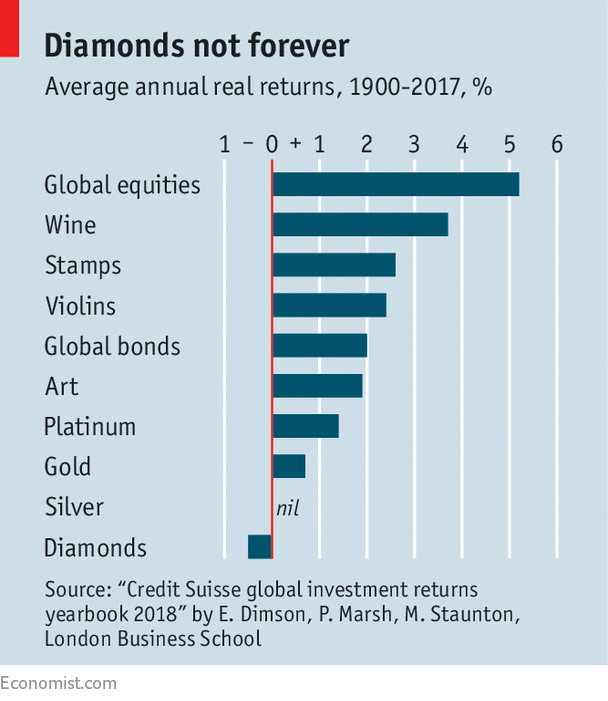
Is that wise? Elroy Dimson, Paul Marsh and Mike Staunton of the London Business School (LBS) have run the numbers for their annual analysis of the financial markets in the Credit Suisse global investment-returns yearbook. Some of these assets have done rather better than others (see chart). Fine wine delivered the best returns; surprising to cynics who might assume that, in the long run, the value of wine vanishes as it turns into vinegar. Really old wine often has historical resonance. A bottle of Chateau Lafite Rothschild from 1787 was sold for $156,450 in 1985 because it was thought to belong to Thomas Jefferson.

Estimating the returns from these assets, after...Continue reading

from Economics http://ift.tt/2oqkSCD
via https://ifttt.com/ IFTTT

Economists cannot avoid making value judgments

AMID the name-calling and bluster that mar many fights between economists are a few common tactics. Belligerents may attack the theory used to support a claim, or the data analysis used to quantify an effect. During the debate over President Donald Trump’s tax bill, to take a recent example, economists bickered over which side had more credibly calculated the economic effect. They did not, for the most part, argue about whether it was morally acceptable to pass a regressive tax reform after years of wage stagnation and rising inequality. To do so would strike many economists as entirely un-economist-like. Yet economics has not always been so shy about moral philosophy. As well as “The Wealth of Nations”, Adam Smith wrote a Theory of Moral Sentiments”. Great 20th-century economists like Paul Samuelson and Kenneth Arrow also took questions of values very seriously. Their successors would do well to take several pages from their books.

Modern economists have attempted...Continue reading

from Economics http://ift.tt/2oswOnE
via https://ifttt.com/ IFTTT

A banking centre seeks to reinvent itself

ON A clear day, sunset over Lake Zug is magnificent. Snow-dusted mountains cut through the orange glow above and are mirrored in the lake below. “Zug is our spiritual home,” says Jeremy Epstein, from Washington, DC, who has just taken 40 foreigners to tour the small Swiss town south of Zurich. They came not for sunsets, though, but to find out how Zug has become known as “crypto-valley”—meaning the home of many firms dealing in crypto-currencies and related activities.

Switzerland’s famous banking secrecy is falling to a global assault on money-laundering and tax evasion. But financial security remains in demand. The country should seek to become the “crypto-nation”, said the economy minister, Johann Schneider-Ammann, last month. Zug aims to be the capital of that nation.

To that end, Switzerland is maintaining loose rules for crypto-businesses, even as other countries are tightening theirs. An industry is developing to store tangible crypto-assets, such as the hard...Continue reading

from Economics http://ift.tt/2oiFWMs
via https://ifttt.com/ IFTTT

Thursday, 22 February 2018

A Reality Check for Wayfair

Investors have been feverishly pushing up Wayfair’s stock despite the company’s growing losses, worsening free cash flow and surging marketing spending. That run may finally be coming to an end.

from WSJ.com: Markets http://ift.tt/2oqoAfP
via https://ifttt.com/ IFTTT
Why Barclays' Promises Are Still for Another Day

If Barclays has the money now for bigger shareholder payouts, why isn’t it making them? The answer shows the risks for investors.

from WSJ.com: Markets http://ift.tt/2CcOFs1
via https://ifttt.com/ IFTTT
Judge Will Decide Two Media Merger Cases in One

Comcast’s pursuit of Fox may hinge on the outcome of the AT&T-Time Warner case.

from WSJ.com: Markets http://ift.tt/2otW3WO
via https://ifttt.com/ IFTTT

British American Tobacco Hasn't Run Out of Fire

British American Tobacco could be forgiven for missing the good old days of straightforward market decline.

from WSJ.com: Markets http://ift.tt/2CcOCwl
via https://ifttt.com/ IFTTT

The pressure on Binyamin Netanyahu is growing

IT SEEMED that things could not get worse for Binyamin Netanyahu, Israel’s prime minister, when on February 13th police recommended that he be indicted for bribery, fraud and breach of trust in two corruption investigations. One involved accusations of gifts for favours; the other alleged back-room dealing with an Israeli newspaper publisher for favourable coverage.

Five days later, however, police brought in eight suspects for questioning in another corruption probe. One of them, Shlomo Filber, had served as Mr Netanyahu’s chief of staff and campaign manager. Another is Shaul Elovitch, a friend of the prime minister and chairman of Bezeq, an Israeli telecoms giant.

The police suspect Mr Netanyahu, who served as communications minister from 2014 to 2017, made regulatory decisions that favoured Bezeq and enriched Mr Elovitch in return for glowing news coverage by his popular website, Walla!. On February 21st Mr Filber agreed to serve as a witness for the state. He is...Continue reading

from Middle East and Africa http://ift.tt/2EV7kJZ
via https://ifttt.com/ IFTTT

Queensland, Australia is one of the world’s worst places for deforestation

Like Congo with eucalypts

MOST deforestation takes place in poor countries. In richer places, trees tend to multiply. Australia is an unhappy exception. Land clearance is rampant along its eastern coast, as farmers take advantage of lax laws to make room for cattle to feed Asia. WWF, a charity, now ranks Australia alongside Borneo and the Congo Basin as one of the world’s 11 worst “fronts” for deforestation.

The worst damage occurs in the north-eastern state of Queensland, which has more trees left to fell than places to the south, where agriculture is more established. It has been responsible for over half of Australia’s land clearance since the 1970s. Its bulldozers are at present busier than they have been for a decade. They erased 395,000 hectares of forest, including huge tracts of ancient vegetation, between 2015 and 2016—the equivalent of 1,000 rugby pitches a day. As a share of its forested area, Queensland is mowing down trees twice as fast as...Continue reading

from Asia http://ift.tt/2sIC77W
via https://ifttt.com/ IFTTT

Elections in north-east India highlight the BJP’s political savvy

“PRESERVE our tradition and culture,” reads the sign at the front of the community hall in the north-eastern Indian state of Meghalaya. It is written in the raspy, clacking language of the local Khasi people, which is more closely related to Khmer, Cambodia’s main language, than it is to the most widely spoken languages in India. Yet beneath it, Nalin Kohli, a suave lawyer flown in from Delhi by the Bharatiya Janata Party (BJP), which runs India’s national government, is giving a stump speech in Hindi. The BJP, with its centralising, Hindu nationalist ideology, does not seem a natural fit for Meghalaya, whose 3m inhabitants are mostly Christian and fearful of losing their identity in a country of 1.3bn people. It is testimony to the BJP’s political acumen that it may end up running the state later this month.

In Meghalaya and nearby Nagaland, where an election will be held on February 27th, and in Tripura, a bastion of communism that voted on February 18th, the rest of India is...Continue reading

from Asia http://ift.tt/2HEy4g4
via https://ifttt.com/ IFTTT

In South Korea fortune-telling will soon be a $3.7bn business

DESTINY is usually said to lurk in heavy drapes of purple velvet, in the wicked glint of a crystal ball, behind a veil of heady incense or in the tuck of a gold-chiffon turban. Your correspondent went in search of hers among a crush of Korean schoolgirls at the “Broken Heart Tarot Club” in booming Hongdae, a university district in Seoul. The café’s façade is an inviting jumble of pink neon signs and glowing graffiti. At the next table, a hip tarot reader spread a deck face-down for two girlfriends in oversized denim jackets, who took turns picking out cards and sipping on their lattes. He looked as cool as them, more rapper than rune-reader, in dark glasses with a chain around his neck.

Interrogating the decorated cards costs 3,000 won (about $2.75) a question. A tarot reader assesses the character of her clients first. Two flicks of her wrist, and a pair of Queens appears. “You chose the strongest set in the deck,” she says brightly. “Fame is within reach.” Will a move...Continue reading

from Asia http://ift.tt/2sIC3VK
via https://ifttt.com/ IFTTT

To save orangutans, think of them as money swinging from trees

A hairy orange meal ticket

THEY move with ease. In the shade of the jungle, a round-bellied orangutan glides towards the ground. Her long limbs give her a gangly appearance, but the flaming strands of her hair are beautiful. Mina is a notoriously bad-tempered ape, who has scratched and bitten dozens of locals on the Indonesian island of Sumatra. But humans harm orangutans far more than orangutans harm humans.

Estimating the number of orangutans is difficult. Researchers have to extrapolate from the number of nests observed. (The apes build new ones to sleep in each night.) A new study published in Current Biology finds that the number of orangutans on Borneo, an island divided between Indonesia and Malaysia, declined by some 148,000 between 1999 and 2015, leaving fewer than 100,000. Within the next 30 years, another 45,000 could disappear. The decline has been steepest, naturally, in areas where the jungle has been razed to plant palm-oil trees....Continue reading

from Asia http://ift.tt/2HChM7H
via https://ifttt.com/ IFTTT

India’s BJP government looks ever more like the one it replaced

AT A rally in the southern state of Karnataka the prime minister wagged his raised finger, accusing the local government, run by the rival Congress party, of creaming a 10% cut from every state contract. “Do you want a commission government, or do you want a mission government?” he boomed. After four years in power Narendra Modi still relishes nothing more than attacking his opponents as no-good, lazy and corrupt.

In response Karnataka’s chief minister, Siddaramaiah, who faces a state election in two months, posted a cartoon on his Twitter account. It pictured glum citizens queuing outside a bank, a reminder of Mr Modi’s painful “demonetisation” in 2016, which sent hundreds of millions of Indians rushing to exchange abruptly voided banknotes. From the back of the bank, meanwhile, emerged a pair of grinning millionaires carrying big sacks of money. Airily waving them off was a Modi-like figure labelled chowkidar or watchman.

The reference was not...Continue reading

from Asia http://ift.tt/2sJF0Fr
via https://ifttt.com/ IFTTT

The Supreme Court limits whistleblower protections under Dodd-Frank

WHEN Paul Somers realised that Digital Realty Trust, the real-estate investment company where he was vice-president, was playing fast and loose with securities rules, including hiding $7m in cost overruns, he alerted senior management. Shortly afterwards he was sacked from his $200,000-a-year job. In 2014, Mr Somers sued the company, arguing that he should have been immune from retaliation by whistleblower protections in the Dodd-Frank Act, a 2010 package of Wall Street reforms passed in the wake of the 2008 financial crisis. The company countered that Dodd-Frank defines “whistleblower” as someone reporting misdeeds to the Securities and Exchange Commission (SEC), not to internal compliance departments. The Ninth Circuit Court of Appeals saw the law differently, but on February 21st, the Supreme Court unanimously sided with the company in Digital Realty Trust v Somers. If Mr Somers wanted his good deed to go unpunished, the nine justices agreed, he would have had...Continue reading

from United States http://ift.tt/2Cdh3dE
via https://ifttt.com/ IFTTT

Canada coddles counterfeiters

“LOUIS VUITTON” handbags for the price of a sandwich. “Rolex” watches that cost as little as a T-shirt. You would not expect to find such obvious fakery at a suburban shopping mall in Canada. But deals of this sort are available at the Pacific Mall in Markham, near Toronto, according to the office of the United States Trade Representative (USTR). Its latest report on “notorious markets”, published in January, lists the three-floor mall alongside the Silk Market in Beijing, Tank Road in Delhi and El Tepito, an open-air market in Mexico City, as places where people can buy counterfeit goods. It is the first time a Canadian bricks-and-mortar outlet has appeared in the report, which has been published since 2011. “Requests for assistance from local law enforcement have reportedly gone unanswered,” the report complains.

The United States has long alleged that its northern neighbour is soft on piracy, allowing vendors to sell goods and cultural products that infringe trademarks and...Continue reading

from Americas http://ift.tt/2sOQzeo
via https://ifttt.com/ IFTTT

Ricardo Anaya, Mexico’s young hopeful

IT TAKES guts to challenge both Andrés Manuel López Obrador, a messianic, silver-tongued populist, and the residual political machine of Mexico’s governing Institutional Revolutionary Party (PRI). Ricardo Anaya is as daring as he is ruthlessly ambitious. Having forged a coalition of his own conservative National Action Party (PAN) and two small centre-left outfits, Mr Anaya argues that the presidential election on July 1st is now a two-horse race between himself and AMLO, as Mexicans call Mr López Obrador, the long-standing front-runner. Several opinion polls support that contention. The question that will hang over Mexico during the next four months is whether, in his sharp-elbowed ascent, Mr Anaya has made too many enemies to unite the disparate majority that dislikes AMLO and thus win the presidency.

On the face of things, this is AMLO’s election to lose. Mexicans have rarely been so gloomy or wanted change more. The PRI government of Enrique Peña Nieto is unpopular. Although it achieved...Continue reading

from Americas http://ift.tt/2EZjVfa
via https://ifttt.com/ IFTTT

Unions are confronted with an existential threat

Labour-saving devices

MARK JANUS could be making history this year. On February 26th the social worker from Illinois will be sitting with his two lawyers in the hallowed setting of the Supreme Court as the justices hear one hour of oral arguments in Janus v American Federation of State, County and Municipal Employees, which asks whether public employees like himself, who choose not to join their designated union, may still be charged a compulsory “agency fee” to support collective bargaining. Mr Janus argues that the fee violates his First Amendment right to freedom of speech, because it forces him to subsidise an organisation whose bargaining position he rejects.

The court’s ruling in the case could determine the future of the labour movement. Though unionism has been in decline for decades, the public sector has remained a stronghold of organised labour. Eighty-four percent of workers today are employed in the private sector; only around 6%...Continue reading

from United States http://ift.tt/2sKk3tX
via https://ifttt.com/ IFTTT
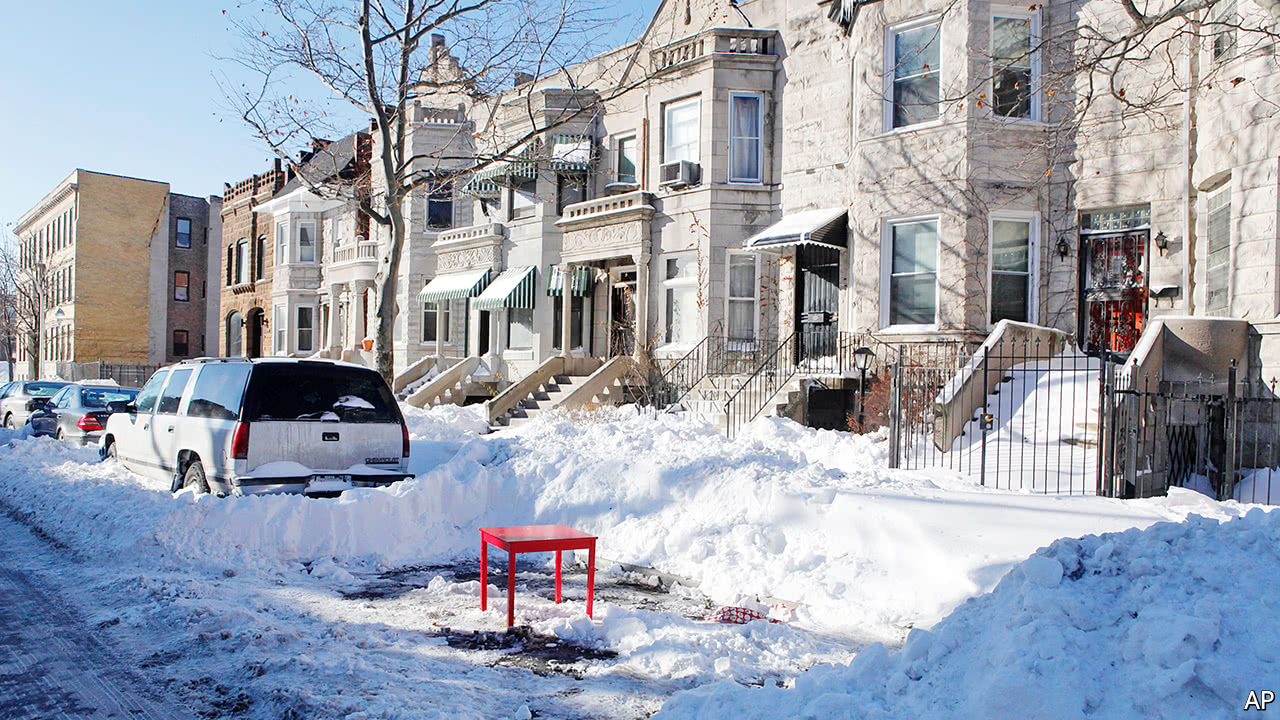
Life, liberty and the pursuit of parking

This is not a table

AFTER two relatively mild winters, Rahm Emanuel’s ability to manage a snowstorm was put to the test earlier this month when it snowed, with little respite, for nine days. On the worst day of the storm Chicago’s mayor cancelled lessons in public schools to minimise traffic. He deployed more than 280 of the city’s salt-spreaders, asked residents to check on family, friends and neighbours, kept schools open for children who had nowhere to go and asked libraries to double as places to keep warm.

Unlike his predecessor, Richard Daley, Mr Emanuel did not mention “dibs” in his remarks about the snow, though he has in the past conceded that he believes in “sweat equity”. Dibs are a Chicago tradition that divides Chicagoans. If you shovel snow from a parking space and defend it with some old furniture to mark the space, you can claim it for as long as the city is covered in snow. “If someone spends all their time digging their car out, do not...Continue reading

from United States http://ift.tt/2EUwmJd
via https://ifttt.com/ IFTTT

What happens if Congress fails to make a deal on DACA by March 5th?

NOEMI LUNA was a teenager when she first realised she was not living legally in the United States. “When you’re little you go to school with other kids. You grow up with them and believe you’re the same, that you’re equal,” she muses. But when her peers started getting driver’s licences and travelling out of the country her parents, who brought Ms Luna to America from Mexico when she was two years old, explained such things would not be possible for her. She was undocumented.

Deferred Action for Childhood Arrivals (DACA), a policy President Barack Obama implemented by executive action in 2012, changed that. The programme allowed undocumented immigrants brought to America as children to study and work in America legally for renewable increments of two years, so long as they had committed no crimes and met certain educational requirements. Now Ms Luna’s future, as well as those of nearly 700,000 other so-called Dreamers, is again uncertain.

In September 2017...Continue reading

from United States http://ift.tt/2sQtubq
via https://ifttt.com/ IFTTT

One arm of the Trump administration thinks climate change is a security threat

UNTIL America gets a grand military parade, a drive along the wharf at Naval Station Norfolk, in Virginia, is the next-best thing. Destroyers, missile-cruisers, nuclear-powered submarines and, most fearsome of all, two 333-metre (1,092-foot) Nimitz-class aircraft-carriers, are enough to make Americans’ spines tingle and enemies shudder. But the menace that most concerns Captain Dean VanderLey, the chief civil engineer for the navy in the mid-Atlantic region, is one that is undeterred by military might. In the 100 years since the base was first built, the sea level has risen by half a metre. In a major hurricane, he says, while surveying the piers and a road linking them to an airfield, “a lot of this would probably be flooded”.

Captain VanderLey is not alone in fretting about the military consequences of climate change. A report published on January 26th by the Department of Defence (DoD) found that more than half of the 3,500 sites surveyed are already...Continue reading

from United States http://ift.tt/2EUwk43
via https://ifttt.com/ IFTTT

With no prime minister in charge, Ethiopia declares a state of emergency

Cry freedom

THE well-heeled residents of Legetafo are not used to demonstrations. The town on the eastern edge of Ethiopia’s capital, Addis Ababa, is home to politicians and businessfolk. Although nearby towns in the region of Oromia, which surrounds the capital, have been hit by anti-government protests since late 2014, these streets have remained mostly quiet.

Yet this month demonstrations broke out there too, as people joined a strike to force the ruling coalition to release more political prisoners (in addition to the thousands it has already freed since the start of the year). “Almost everyone” took to the streets, says Zenebe, a local restaurant-owner. Things quickly turned ugly. People set up roadblocks and burned tyres. The army responded with tear gas and bullets. Faced with spreading protests and ethnic attacks on Tigrayans (who are about 6% of the population but dominate politics), the government announced a state of emergency, giving itself wide powers...Continue reading

from Middle East and Africa http://ift.tt/2FlgKvQ
via https://ifttt.com/ IFTTT

Saudi Arabia and the UAE are gobbling up Yemen

BRIGHTLY painted dhows bob on the waves of the Arabian Sea. Fishermen auction the morning’s catch of swordfish, tuna and manta rays. Sardines dry in the sun, fodder for the camels that pad through the street. Life used to be simple in the port of Ghayda, the capital of Mahra governorate, tucked in Yemen’s far east.

The arrival of soldiers from Saudi Arabia and the United Arab Emirates (UAE) is complicating things. Abd Rabbo Mansour Hadi, Yemen’s president, invited them into the country to repel Houthi rebels, who pushed him out in 2015. The Houthis control about a fifth of the territory. Saudi and Emirati forces hold much of the rest. But as their grip tightens, Yemen fractures.

Saudi and Emirati officials say their deployments across the country are part of their war effort. But join the dots and Saudi Arabia’s positions match the incense trade route that long ran overland from the Indian Ocean to Arabia. The kingdom appears to be carving a new corridor to the...Continue reading

from Middle East and Africa http://ift.tt/2GxBShV
via https://ifttt.com/ IFTTT

Islamic State has been stashing millions of dollars in Iraq and abroad

GONE are the days when the black flag fluttered over a third of Iraq and almost half of Syria. Crushed on the battlefield, Islamic State has lost roughly 98% of its self-proclaimed “caliphate”. Some 70,000 of its fighters (who numbered perhaps 100,000 at their peak) are thought to have been killed. But thousands have escaped. Some have remained in Iraq and Syria; others have slipped into Turkey or hooked up with IS affiliates in Egypt, Libya and South-East Asia. Around 10,000 of the group’s foreign fighters are thought to have left the Middle East.

Those intent on continuing to wage jihad will still have the means. IS has quietly stashed millions of dollars across the region. It has invested in businesses in Iraq, bought gold in Turkey and continued to transfer money to its affiliates. “You wouldn’t believe the amount of money that has gone out of IS’ territory,” says a former weapons-dealer involved in transferring the jihadists’ cash. An Iraqi legislator estimates that IS smuggled...Continue reading

from Middle East and Africa http://ift.tt/2Flbp7Q
via https://ifttt.com/ IFTTT