If wages have finally started a sustained rise, imagine what will happen to the economy when businesses and consumers start spending their tax cut windfalls. And imagine how the Federal Reserve will respond.
from WSJ.com: Markets http://ift.tt/2BRDSyJ
via https://ifttt.com/ IFTTT
Saturday, 3 February 2018

Deutsche Bank Is Stuck With Its Poor Reputation
Deutsche Bank still has one very simple problem: Its revenues are falling faster than its costs. This is the reason investors aren’t prepared to value the German banking giant’s stock any more highly.
from WSJ.com: Markets http://ift.tt/2nBXmTZ
via https://ifttt.com/ IFTTT
from WSJ.com: Markets http://ift.tt/2nBXmTZ
via https://ifttt.com/ IFTTT
No More Tigers in Exxon's Tank
The world’s largest private energy company is making far weaker returns on its investments and that may not improve much.
from WSJ.com: Markets http://ift.tt/2BRDRe9
via https://ifttt.com/ IFTTT
from WSJ.com: Markets http://ift.tt/2BRDRe9
via https://ifttt.com/ IFTTT
No End in Sight for Amazon's Wild Ride
Investors in Amazon.com should be prepared for even-more ambitious gambits from the indefatigable Jeff Bezos after the company posted record earnings.
from WSJ.com: Markets http://ift.tt/2nxvwYG
via https://ifttt.com/ IFTTT
from WSJ.com: Markets http://ift.tt/2nxvwYG
via https://ifttt.com/ IFTTT
Sony Has New Boss, Same Good Story
The man who orchestrated Sony’s comeback is stepping down. Thankfully, the iconic technology brand still looks like a solid bet for investors.
from WSJ.com: Markets http://ift.tt/2BRDP61
via https://ifttt.com/ IFTTT
from WSJ.com: Markets http://ift.tt/2BRDP61
via https://ifttt.com/ IFTTT
China's Bad Banks Face a Case of Indigestion
Distressed-debt asset managers are helping give Chinese banks’ share prices a boost by buying their soured loans. But just how much can they absorb?
from WSJ.com: Markets http://ift.tt/2nx2YPg
via https://ifttt.com/ IFTTT
from WSJ.com: Markets http://ift.tt/2nx2YPg
via https://ifttt.com/ IFTTT
Apple Dodges iPhone X Worries
A big jump in iPhone prices helps offset weaker unit sales.
from WSJ.com: Markets http://ift.tt/2BRDOyZ
via https://ifttt.com/ IFTTT
from WSJ.com: Markets http://ift.tt/2BRDOyZ
via https://ifttt.com/ IFTTT
The Maldives’ Supreme Court abruptly orders the release of several opposition politicians
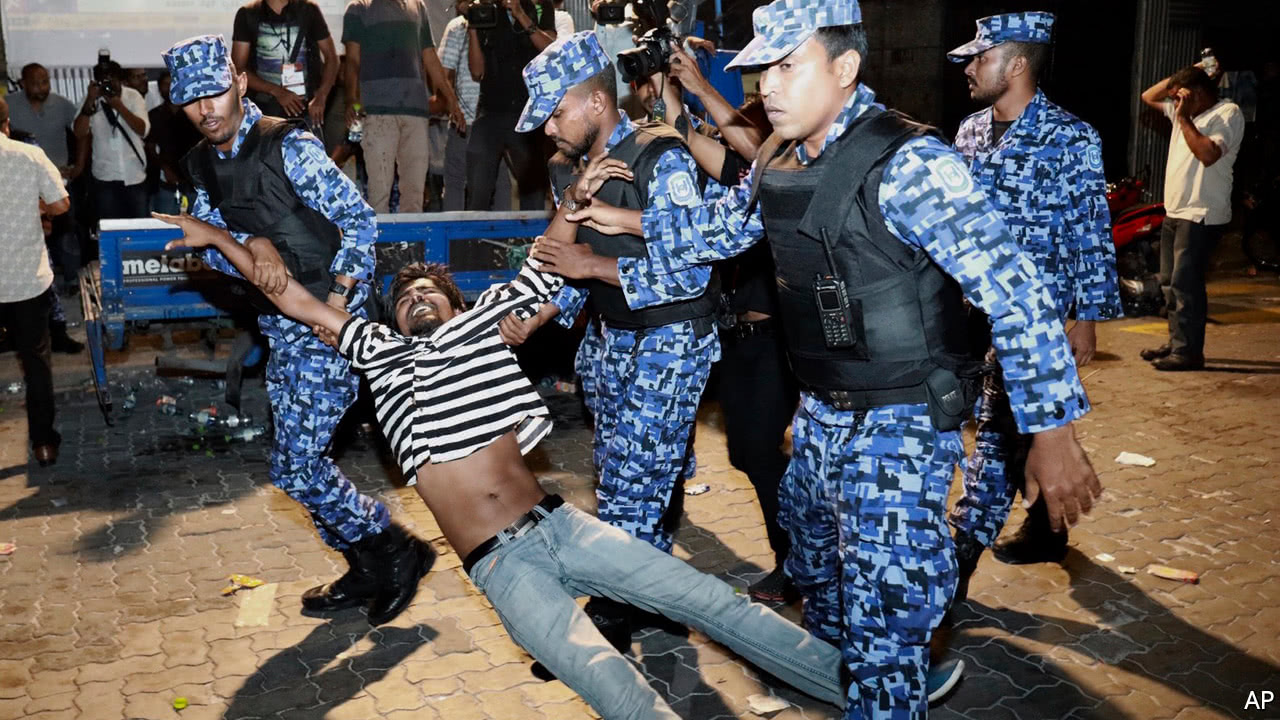
FEBRUARY began with Abdulla Yameen in complete charge of Maldivian politics. One by one, he had seen off his political opponents. The courts had meekly convicted his predecessor-but-one as president, his vice president, his defence minister and the heads of two opposition parties. They had also awarded him control of the ruling party, which was being contested by his half-brother, Maumoon Abdul Gayoom, Mr Yameen’s predecessor-but-two, who had ruled as a dictator for 30 years. The Election Commission stripped 12 opposition MPs of their seats, and the Supreme Court made it impossible for pro-government MPs to defect to the opposition and keep their parliamentary jobs. That protected Mr Yameen from impeachment, among other inconveniences.
So it came as quite a surprise when the same Supreme Court overturned all these decisions out of the blue late on February 1st. The trials of all the opposition figures, it declared, had been politically motivated. They should be retried, it said, and released in the meantime. As for the deposed opposition MPs,...Continue reading
from Asia http://ift.tt/2nBqQAv
via https://ifttt.com/ IFTTT
Latin America’s human-rights court moves into touchy territory
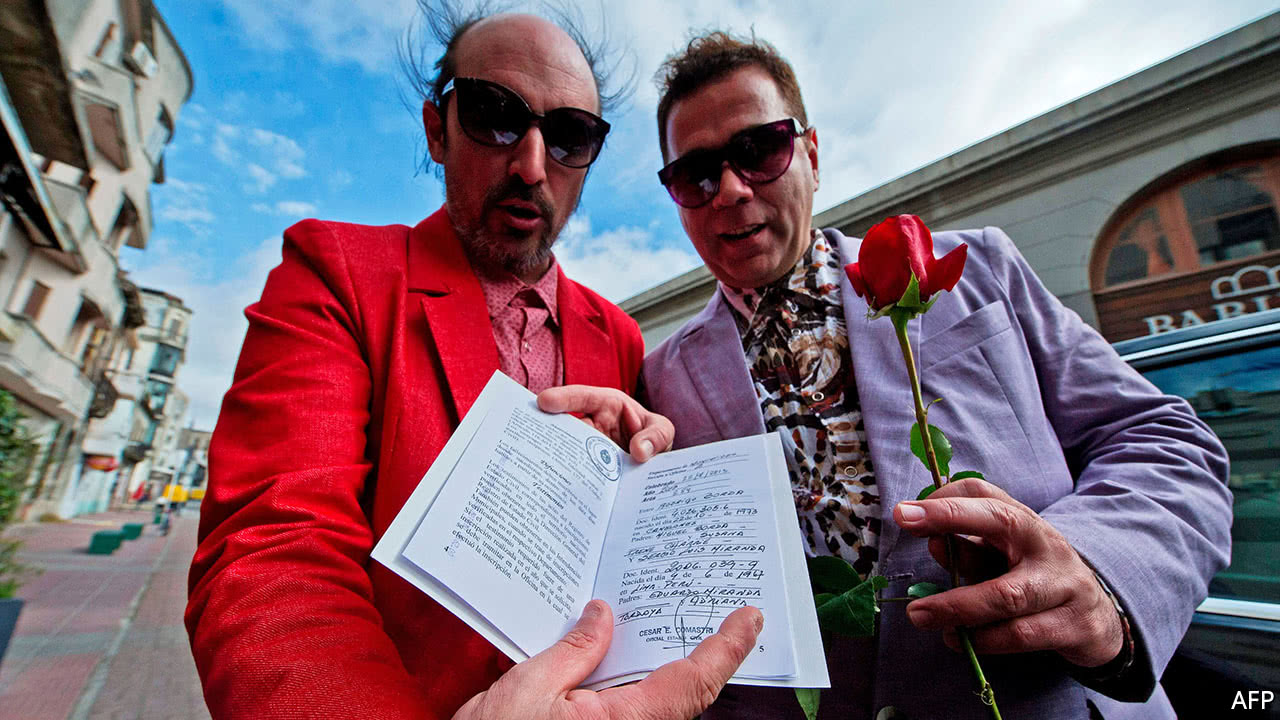
IN A quiet suburb of San José, Costa Rica’s capital, is a building that looks like the White House in miniature. Costa Rica’s government gave it in 1993 to the Inter-American Court of Human Rights (IACHR), established 14 years earlier, to show its commitment to human rights. Until 2008, when the court built a second floor above the garage with money from Norway, its seven judges deliberated in a repurposed dining room. The setting is modest. The decisions emanating from it, increasingly, are not.
On January 9th the court told Costa Rica to legalise same-sex marriage. That provoked a furore in the country, which is scheduled to hold the first round of presidential and legislative elections on February 4th (see article). A fringe candidate for the presidency who vows to ignore the ruling is suddenly leading in the polls. The judgment will...Continue reading
from Americas http://ift.tt/2E3ok02
via https://ifttt.com/ IFTTT
A gay-marriage ruling shakes up Costa Rica’s election
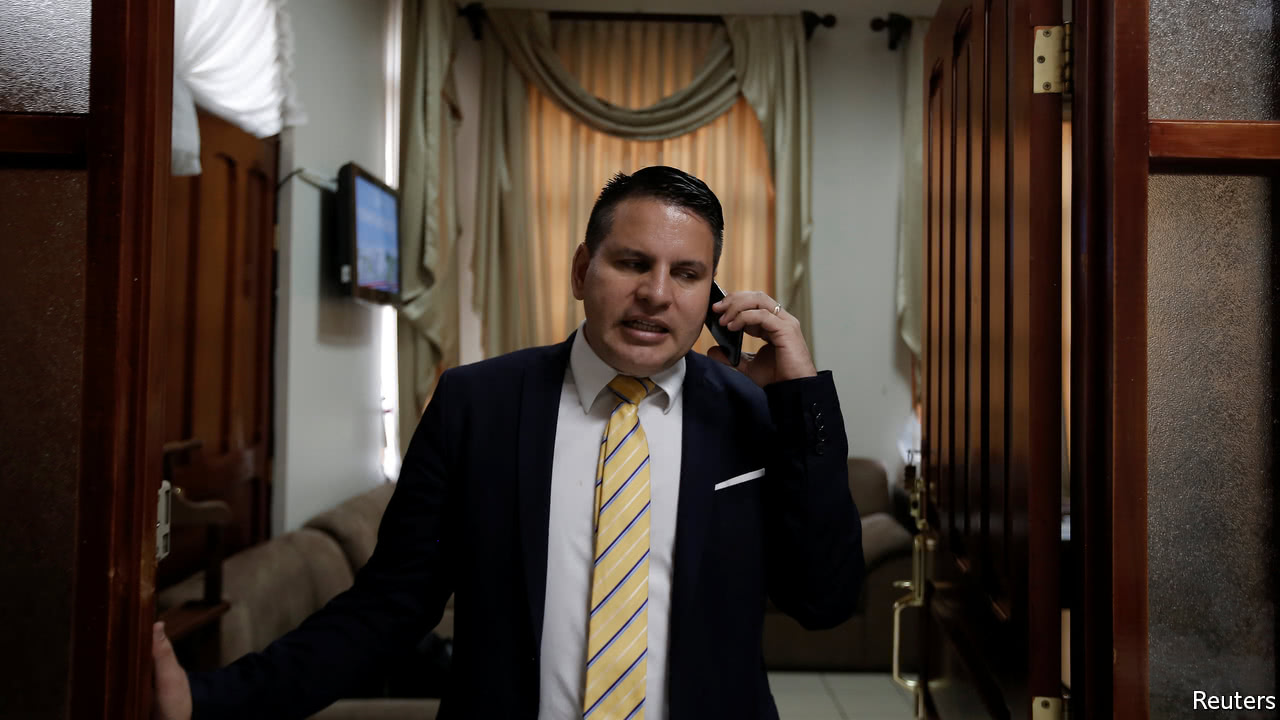
A “SLICE of Iowa misplaced on the Central American isthmus”, is how an American political scientist once characterised Costa Rica. He meant it as a compliment. Costa Rica is orderly, relatively rich, and has been a democracy since 1949. But ticos, as Costa Ricans call themselves, are feeling disgruntled. Their sour mood is shaping elections to be held on February 4th. None of the five leading presidential candidates has the support of more than 20% of the electorate, according to the (unreliable) polls. Two are anti-establishment. For the first time in Costa Rica’s democratic history, such flame-throwers could win.
A ruling on January 9th by the Inter-American Court of Human Rights seems to oblige Costa Rica to let same-sex couples marry. That angered its conservative electorate (see article). But it is not the only cause of discontent. The unemployment...Continue reading
from Americas http://ift.tt/2FzPnNy
via https://ifttt.com/ IFTTT
Canadians get the right to watch American Super Bowl ads

DURING Super Bowl 50, in 2016, American viewers got to watch Heinz’s uplifting “wiener stampede” commercial, with dachshunds dressed as hot dogs gambolling in slow motion across a meadow. An ad for T-Mobile featured executives from a rival company badgering Drake, a rapper, to clutter up his lyrics with legalese. Canadians watching the same game were treated to a dull slide show for Sun Life Insurance.
Last year Canadian football fans had a choice, thanks to the television regulator. It ruled that access to American made-for-the-occasion ads was “in the public interest”. CTV, which had broadcasting rights in Canada, continued to show local ads. But most Canadians can watch Fox, which showed such treats as a Donald Trump-inspired shampoo commercial. CTV lost nearly 40% of its viewers during the game.
This year Bell Media, which owns CTV, tried again to feed viewers Canadian-only fare on the two channels showing the Super Bowl. This...Continue reading
from Americas http://ift.tt/2E5wIMs
via https://ifttt.com/ IFTTT
China moves into Latin America

WHILE Donald Trump was in Davos last week trying to persuade the global plutocracy that “America First” does not mean “America alone”, China’s foreign minister, Wang Yi, was promoting globalisation, free trade and co-operation in Latin America. For his hosts, the contrast was striking. Mr Trump has insulted Mexico, El Salvador and Haiti, discourages investment in the United States’ southern neighbour, and talks trade protectionism. China, in the soothing words of Mr Wang, offers Latin America a “strategy of mutual benefit and shared gain”.
He was speaking at a meeting between China and the Confederation of Latin American and Caribbean States (CELAC), a talking shop comprising all the region’s 33 countries. Contrary to some reports, China did not formally invite Latin America to join the Belt and Road Initiative that is the cornerstone of President Xi Jinping’s foreign policy and features big investments in infrastructure in Eurasia and Africa. But it came close, calling Latin...Continue reading
from Americas http://ift.tt/2FyaQq0
via https://ifttt.com/ IFTTT
Friday, 2 February 2018
Uzbekistan’s reforming president sacks his hated spymaster

FOR 23 years Rustam Inoyatov (pictured) was perhaps the most feared person in Uzbekistan. Officially he was the security chief; unofficially, the puppet-master of the dictatorial regime. That changed on January 31st, when Shavkat Mirziyoyev, Uzbekistan’s reforming president, pushed the puppeteer aside in a bloodless coup.
Mr Mirziyoyev dismissed Mr Inoyatov—a jowly, publicity-shy septuagenarian—as director of the National Security Service, the successor agency to the KGB and just as ruthless as its Soviet predecessor. He sweetened the pill by naming Mr Inoyatov a presidential adviser and a senator in the rubber-stamp parliament. Nonetheless, the message was clear: Mr Mirziyoyev now runs the show in Central Asia’s most populous state.
Under Islam Karimov, Mr Mirziyoyev’s predecessor, who died in 2016 after ruling with an iron fist for a quarter of a century, Mr Inoyatov acquired powers far beyond his brief. His day job involved crushing all forms of dissent among the cowed population of 32m, but in practice nothing happened in...Continue reading
from Asia http://ift.tt/2EAj9mg
via https://ifttt.com/ IFTTT
Thursday, 1 February 2018
America is not prepared for the next big earthquake
DENNIS RICHARDSON, Oregon’s secretary of state, brought his children up to be ready. “When a crisis arises, the time for preparation has passed,” he would tell them. Today Mr Richardson worries his state is less prepared than it should be. There is a 10% chance that in the next 30 years an earthquake between 8.0 and 9.0 in magnitude will rupture the Cascadia subduction zone that runs along the coast of Washington, Oregon and Northern California. If the quake hit, it would trigger a tsunami that could raze coastal houses and infrastructure.
On January 25th Mr Richardson’s office published a report describing how vulnerable the state is to a Cascadia quake. To begin with, it points out that the building which houses Oregon’s emergency co-ordination centre has not been retrofitted to withstand earthquakes. It estimates that a big tremor combined with a tsunami could claim 10,000 lives and cost $32bn in damage and lost output in Oregon alone. Calculations made in 2013 suggest that it would take between one and three years to restore drinking water and sewerage in coastal areas. The wreckage left behind would be enough to fill 1m refuse trucks.
The Pacific north-west is not the only region with a problem. The United States Geological Survey (USGS), a scientific agency of the federal government, says there is a 99.7% chance that California will suffer...Continue reading
from United States http://ift.tt/2E6ZqMW
via https://ifttt.com/ IFTTT
The Trump White House has more power to constrain bad guys

ODDLY little is known about President Donald Trump’s readiness to use massive force against adversaries. An isolationist on the campaign trail, at times Mr Trump has sounded quite the hawk. What is known is his desire to bargain from a position of strength, whether calling for more defence spending or a new nuclear arsenal that is “so strong and powerful”.
The same model applies to Team Trump’s approach to human rights and corruption. The president has sent mixed signals about global torturers and kleptocrats, chiding some while praising others as “tremendous” allies. Yet with little fanfare, he signed Executive Order 13818 a few days before Christmas last year. A remarkably broad sanctions instrument, one human rights expert calls it a cross between a scalpel and “a tactical nuclear weapon”.
Critics call Mr Trump an appeaser of despots. They were loud after his administration said on January 29th that there was no need to rush new sanctions on Russia demanded by Congress in near-unanimous House and Senate votes...Continue reading
from United States http://ift.tt/2FA987B
via https://ifttt.com/ IFTTT
The party of law and order battles the G-Men

QUITE often, the peddling of a conspiracy theory is a form of confession: a window into how a suspicious mind thinks that the world works. President Donald Trump says that federal probes into Russian attacks on the presidential election of 2016 are a “hoax” confected by Democrats to explain Hillary Clinton’s defeat, and are now kept alive by what he calls the “Deep State Justice Department”.
These are heady days for believers in that plot. On January 29th a Trump bogey-man, the deputy director of the FBI, Andrew McCabe, abruptly quit his post and went on leave pending his formal retirement. Mr McCabe’s wife, the conspiracy-minded note, is a Democrat who ran unsuccessfully in 2015 for a state Senate seat in Virginia, helped by six-figure campaign contributions from a close Clinton ally. Incredibly, at least to Mr Trump and his supporters, in early 2016 Mr McCabe was allowed to oversee a probe into Mrs Clinton’s improper handling of secret...Continue reading
from United States http://ift.tt/2E2Jtrh
via https://ifttt.com/ IFTTT
Donald Trump has an immigration proposal to sell

“IN MANY ways,” said one pundit after Donald Trump’s maiden address to Congress 11 months ago, “it was the long-awaited pivot that Trump has always promised…He was disciplined, didn’t veer much at all from the script and hit his marks.” This assessment reflected where Candidate Trump had set the bar. Reading from a teleprompter and not belittling opponents was enough to get some critics to call him presidential. It did not last long. Four days later Mr Trump took to Twitter to accuse Barack Obama, falsely, of masterminding a plot to tap his phone during “the very sacred election process”.
A year into his term, public opinion on the 45th president has calcified. His approval ratings are stuck right where they were a couple of weeks after his inauguration: just under 40%, according to Gallup. For a president in office while wages are growing and unemployment at a 17-year low, that is extraordinarily poor. Though frustrating for the White House, there is wisdom in the polls’...Continue reading
from United States http://ift.tt/2FyDPKk
via https://ifttt.com/ IFTTT
The last of the moderates

FOR those Democrats, brimming with anti-Trump zeal, who think now is the time to cleanse themselves of ideological impurity, Claire McCaskill has a message. “I want people to understand, particularly in the progressive wing of my party,” said the senator from Missouri, who is fighting a tough battle for re-election in November, “that it’s not just a question of whether I am perfect for them on all the issues. It is that, if I lose, a Republican will take my place who’d be anathema to them on every issue.”
Speaking on the fringe of a campaign event in St Louis, Missouri’s second city, Ms McCaskill had had a trying week. Her state elected President Donald Trump by a 19-point margin, mainly, as everywhere, because he promised to keep out foreigners. Yet her party, egged on by its progressives, had just shut down the federal government in a botched bid to protect a multitude of illegal immigrants. Ms McCaskill, a tough operator with a prosecutor’s mind and a folksy manner, joined four...Continue reading
from United States http://ift.tt/2E498zI
via https://ifttt.com/ IFTTT
Tereza Lee, the original Dreamer

TEREZA LEE is the original DREAMer. Now in her mid-thirties, she is also a perfect illustration of why people brought to the country illegally when they were minors ought to become American citizens. A largely self-taught pianist (her family could not afford heating or hot water, let alone a piano teacher), her talent was discovered by teachers at Chicago’s Merit School of Music. At 16 she performed Tchaikovsky’s Piano Concerto No. 1 with the Chicago Symphony Orchestra. When her teacher pushed her to apply for college, she had to come clean about being in the country illegally. They turned to Illinois’s senior senator, Dick Durbin, for help. After finding out that Ms Lee would probably be deported, the senator agreed to write a bill just for her. It passed Congress without a problem. Other youngsters came forward to ask Mr Durbin for help, often hiding in the car park in front of his office until he left work. The senator teamed up with Utah’s...Continue reading
from United States http://ift.tt/2FzIYBY
via https://ifttt.com/ IFTTT
Scandal swirls around Thailand’s junta at an awkward moment

TIME is currently of the essence in Thailand. In December a photo of Prawit Wongsuwan, the deputy prime minister, wearing a luxury watch caught the attention of activists. The timepiece appeared to be worth more than $100,000. How could the general afford such an item on his modest military salary and why had he not mentioned it in the declaration of assets he made on taking office? Since then social-media vigilantes have uncovered pictures of him wearing 25 different watches worth around $1.2m, including 11 Rolexes. A bad situation was made worse when Mr Prawit lamely explained that he had borrowed them all from friends.
The prime minister, Prayuth Chan-ocha, defended his brother-in-arms last month, saying public and private matters should not be confused. He also said it was up to the National Anti-Corruption Commission to investigate. But the commission has not yet thought it necessary to open a full probe into the affair. Its...Continue reading
from Asia http://ift.tt/2DT76is
via https://ifttt.com/ IFTTT
Why South Korea is growing wary of China

TO UNDERSTAND South Korea’s transformation into an export powerhouse, climb up to the observatory on Yeompo mountain overlooking the city of Ulsan. To the north, on the left bank of the Tae-Hwa river, stands Hyundai’s vast carworks and a shimmering shoal of new vehicles. To the west, across the river, chemical works lazily puff out white plumes. To the south and east, around the estuary, half-built metal hulls litter Hyundai’s shipyards.
A giant red gantry crane stands out. Bought for $1 in 2002 from the fading Kockums shipyard in Sweden, it is known as the “Tears of Malmö”. These days, the people of Ulsan wonder whether they, too, will soon be crying. Just as South Korean competition sent much of European shipbuilding into bankruptcy, China is now threatening to do much the same to South Korea’s industry.
A decade ago South Korea had been the biggest of the “big three” shipbuilding powers, along with China and Japan, that together account for about 90% of global ship...Continue reading
from Asia http://ift.tt/2EwRbHR
via https://ifttt.com/ IFTTT
A spate of attacks in the Afghan capital rattles the government

THREE murderous attacks in Kabul in little more than a week have thrust Afghanistan back into the headlines. They included the siege of a luxury hotel, a massive blast near a hospital caused by an explosive-laden vehicle painted to look like an ambulance and an assault on an army compound. More than 130 people have been killed and over 300 maimed. Equally horrifying was an attack in the city of Jalalabad on the offices of Save the Children, a British charity, in which six people died. The violence left Afghans wondering whether the Taliban and the local branch of Islamic State, which between them claimed responsibility for the attacks, are shifting their focus to urban terrorism—and why the security services seem so incapable of defending the country against it.
A comforting answer to the first question could be that the urban attacks reflect the increased pressure the Taliban have been under in rural areas since Donald Trump acquiesced to...Continue reading
from Asia http://ift.tt/2DRCgqw
via https://ifttt.com/ IFTTT
The Japanese government’s drive to lift wages is gathering steam

EIGHT years after Natsumi started work at a printing company in Tokyo, her monthly salary is only ¥15,000 ($138) more than it was when she started. That equates to a paltry rise of less than 1% a year. She hopes that this year’s wage negotiation—an annual rite between employers and unions known as the shunto, or spring offensive—will provide a bigger boost.
She may be in luck. Economists are predicting the highest rise since wages started to inch up during the shunto in 2014, reaching 2.1% last year. (This figure includes regular wages, which are made up of “base pay” and a seniority-based element that is raised automatically, but excludes bonuses and overtime.) Asahi Group plans to raise wages by 3.4% at its soft-drinks business. Ikinari! Steak, a restaurant chain, says it is increasing the base wage alone by 5% for all its 430 full-time employees. “The momentum is there this year,” says Takeshi Niinami, the boss of Suntory, another drinks firm, who also advises the government on...Continue reading
from Asia http://ift.tt/2EsfZRb
via https://ifttt.com/ IFTTT
To Muslim zealots’ dismay, Indonesians love raunchy dangdut music

EVEN before they enter the Asmoro bar, a nightclub in central Jakarta, patrons can hear the music. A regular beat—dang, dut, dang, dut—spills out, only slightly muffled, onto the street. Inside the smoky, dimly lit space, women in tight mini-dresses and teetering heels stand by a stage where nine men play various instruments. Occasionally one woman, known as a “waitress” although she appears to do little waitressing, breaks into song, usually accompanied by one of the male visitors to the bar. At other points the women sway to the music as customers slip them wads of cash, flashing disco lights illuminating them momentarily in the darkness.
On the other side of the city, around a thousand people sit in a television studio owned by Indosiar, a private TV station. They are there to watch the recording of “Liga Dangdut”, a show that started on January 15th. It involves 170 contestants competing to be the best dangdut singer. Male and female...Continue reading
from Asia http://ift.tt/2DT6NnO
via https://ifttt.com/ IFTTT
Changing the constitution of the Philippines may prove perilous

THE coarse-talking, arse-kicking president of the Philippines is not the sort to worry unduly about the finer points of the law. Yet Rodrigo Duterte is making plain his priority in 2018: changing the constitution in ways that will reshape the state. Last month Mr Duterte announced a committee of politicians and worthies to feed ideas to Congress. The plan is for Congress, armed with the committee’s recommendations, to turn itself into a constituent assembly empowered to draft revisions. The country will then vote on its proposals in a plebiscite. The task may consume the rest of Mr Duterte’s presidency, at a time when much needs fixing elsewhere. Many Filipinos are scratching their heads. Others question Mr Duterte’s motives.
The least contentious of the president’s three desired changes is the easing of the constitutional limits on foreign ownership of companies, to attract foreign capital and encourage competition. The other two goals are radical. One is to remove some of the president’s...Continue reading
from Asia http://ift.tt/2EwRceT
via https://ifttt.com/ IFTTT
Transcript: Interview with Metropolitan Hilarion Alfeyev

As part of reporting for a piece in this week’s issue about the relationship between the Russian state and the Russian Orthodox church, we spoke to Metropolitan Hilarion Alfeyev, the church’s external affairs boss. The full transcript, lightly edited for readability, is published here.
The Economist: I'd like to start with the church’s role in a sense of national identity of Russians and how the church’s role in that national identity has changed since the end of communism.
I think if we look at the history of the Russian nation and of the Russian state it would be very difficult to overestimate the role the Orthodox church played in the fashioning of the Russian national identity. And if you look at the Russian culture, not speaking of the medieval culture with its churches and icons and church singing, even if we look at the...Continue reading
from Europe http://ift.tt/2GBB0tt
via https://ifttt.com/ IFTTT
Matteo Renzi struggles to hold on to power as the election nears
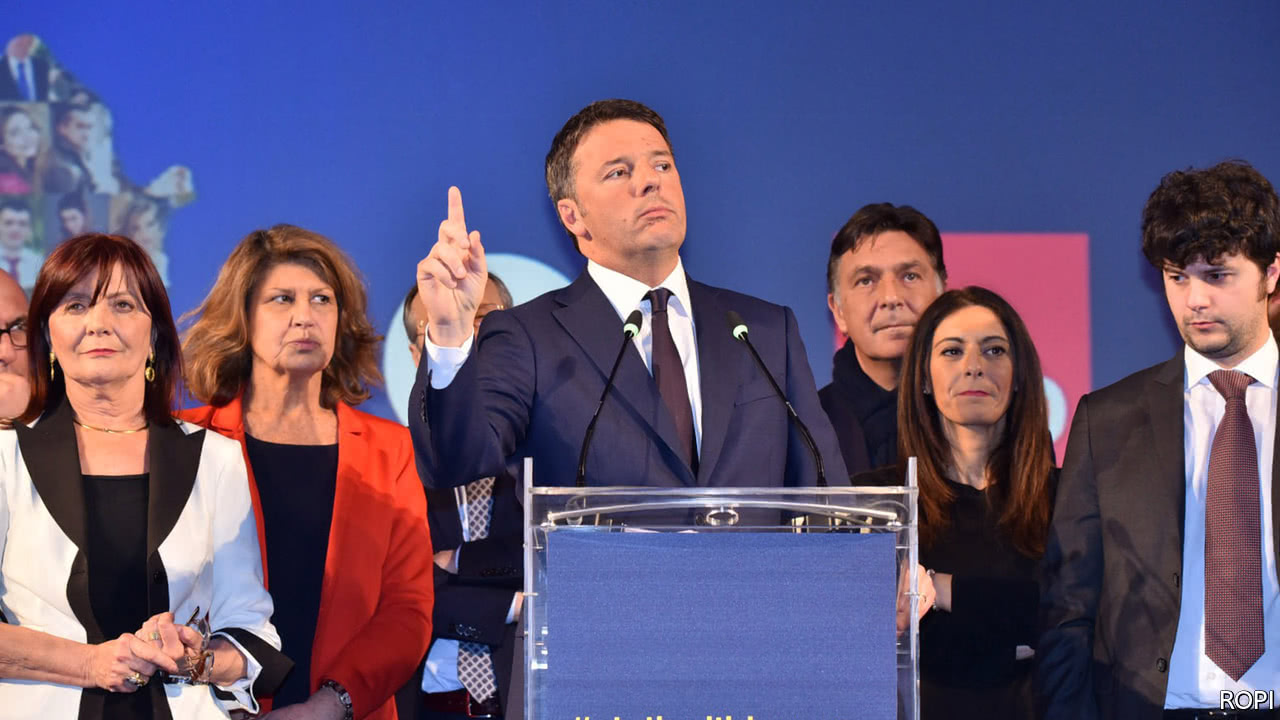
THEY like their food in Modena, a city on the foggy flatlands south of the River Po that gave the world the Ferrari, Luciano Pavarotti and a restaurant, the Osteria Francescana, that was voted the best in Europe last year. As people gathered for a fundraising dinner in the suburb of San Damaso, a delectable aroma wafted through the sports hall where it was to be served. And among the pleasures it betokened was the sweet taste of revenge.
The dinner was for a new party, Liberi e Uguali (Free and Equal, or LeU), founded last year by politicians who had left Matteo Renzi’s governing, centre-left Democratic Party (PD). Some of the rebels objected to his business-friendly policies; others complained of his ruthless marginalisation of the party’s old guard, including the night’s main speaker, Pier Luigi Bersani, who led the PD until 2013. Mr Bersani insists his differences with Mr Renzi are political. “He has taken the PD—my PD—torn out its roots, and taken it elsewhere,” he says as he waits...Continue reading
from Europe http://ift.tt/2GBQU7d
via https://ifttt.com/ IFTTT
Turkey and NATO are growing apart

ANXIETIES about Donald Trump’s commitment to NATO and Russia’s military assertiveness remain at the top of the alliance’s agenda. But close behind looms the problem of semi-detached Turkey, a country that not only possesses NATO’s second-biggest armed force, but also straddles a critical geopolitical fault-line between west and east.
Turkey is not only unpredictable. It also pursues a nationalist agenda that can put it at odds with its obligations to allies. The most recent source of tension is the simmering row between Turkey and America over Turkey’s incursion into Afrin, a Kurdish enclave in north-west Syria. This is not, strictly speaking, a matter for NATO. However, American troops could soon find themselves under direct attack from their NATO ally if Turkey’s president, Recep Tayyip Erdogan, carries out a promise to “strangle…before it is born” a 30,000-strong American-backed “border security force”, composed largely of YPG Kurdish fighters whom Turkey regards as...Continue reading
from Europe http://ift.tt/2FBZUb7
via https://ifttt.com/ IFTTT
America produces an underwhelming list of Kremlin cronies

RUSSIA’S elite had been on edge for months. A new American law on sanctions, passed last summer, required the administration to draw up lists of senior officials and “oligarchs” close to Vladimir Putin’s regime. Though inclusion on the list would not automatically lead to sanctions, many feared that it would be tantamount to a scarlet letter. Businessmen hired lawyers and lobbyists to press their case in Washington. Some considered bringing capital back to Russia, fearing asset freezes and seizures.
Then early this week the list came out, and sniggering ensued—on both sides of the Atlantic. Just over 100 senior government officials were named. Keen commentators noted that the selection closely matched publicly available lists on the English-language version of the Kremlin website. Konstantin Kosachev, the head of the foreign-affairs committee of the upper house of parliament, said that the administration appeared to have “copied the Kremlin’s phone book”. Another 96 big businessmen were singled out; the entirety, in fact, of the...Continue reading
from Europe http://ift.tt/2E7dSEQ
via https://ifttt.com/ IFTTT
Vladimir Putin embraces the Russian church

EVERY January 18th a million Russians make foreigners shiver and wonder. This year again, in temperatures ranging from -10°C in Moscow to -45°C in Yakutia, they plunged into a cross-shaped hole cut in the ice. The annual ritual, marking the baptism of Christ, was the top news item on Russian state television, mainly because one man taking part was President Vladimir Putin. Arriving dressed in the peasant attire of a sheepskin coat and felt boots, he stripped off, crossed himself and leapt into the icy waters of Lake Seliger.
Local officials followed suit. In the ancient city of Yaroslavl, on the Volga, the local mayor and a member of the United Russia party told district prefects to lead by example. “I ask all heads and their deputies to take part in this organised event. You are all Orthodox people, are you not?” he said in a televised statement. He seemed the spitting image of a Soviet Komsomol leader ordering public workers to take part...Continue reading
from Europe http://ift.tt/2FyaShC
via https://ifttt.com/ IFTTT
Drugs policy in Germany is a mess

“THE pain wasn’t going away.” It was 2004. Two years earlier a car had missed a “stop” sign and hit Günter Weiglein, throwing him off his motorbike, breaking many bones and leaving him full of medical screws and plates. Prescription painkillers were proving ineffective, leaving him sweaty and sleepless. Then, one evening, he smoked cannabis with some friends. It was a revelation: “70% of the pain went, without side effects.” It became a routine and, after a close shave with the police, he sought the right to smoke legally. In 2014 the government granted him an exceptional licence to consume cannabis, which helped pave the way for the nationwide legalisation of medicinal cannabis. It came into force last March.
But almost a year on, sufferers like Mr Weiglein struggle to obtain the weed they need. One problem is the conservatism of the medical industry. Many doctors are reluctant to prescribe cannabis rather than traditional...Continue reading
from Europe http://ift.tt/2E8FKrY
via https://ifttt.com/ IFTTT
How Italy’s interior minister tackles illegal migration

MOST interior ministers can hope for little more from their job than to avert disaster. Managing migration, crime, terrorism, policing and prisons is largely a matter of avoiding bear-traps rather than seeking glory. Jack Straw, who held the job in Britain for four years, called it “Life in the Graveyard”.
Not, though, for Marco Minniti, Italy’s interior minister. In the first half of 2017 a sharp rise in maritime migration from Libya spooked Europeans, still recovering from the refugee crisis of 2015-16. But crossings fell by 70% after Mr Minniti stepped in. Polls declared him Italy’s most popular politician. Some even spoke of him as a potential prime minister.
From his office in Rome, Mr Minniti sets out the steps of his strategy. First, last February, came a deal between Italy and Libya’s UN-backed government, which the EU quickly supported. Then, in April, Mr Minniti brokered an agreement between warring tribal leaders from Libya’s sparsely populated south, through...Continue reading
from Europe http://ift.tt/2rUh1Ts
via https://ifttt.com/ IFTTT
Cancer is a curse, but also a growth market for investors
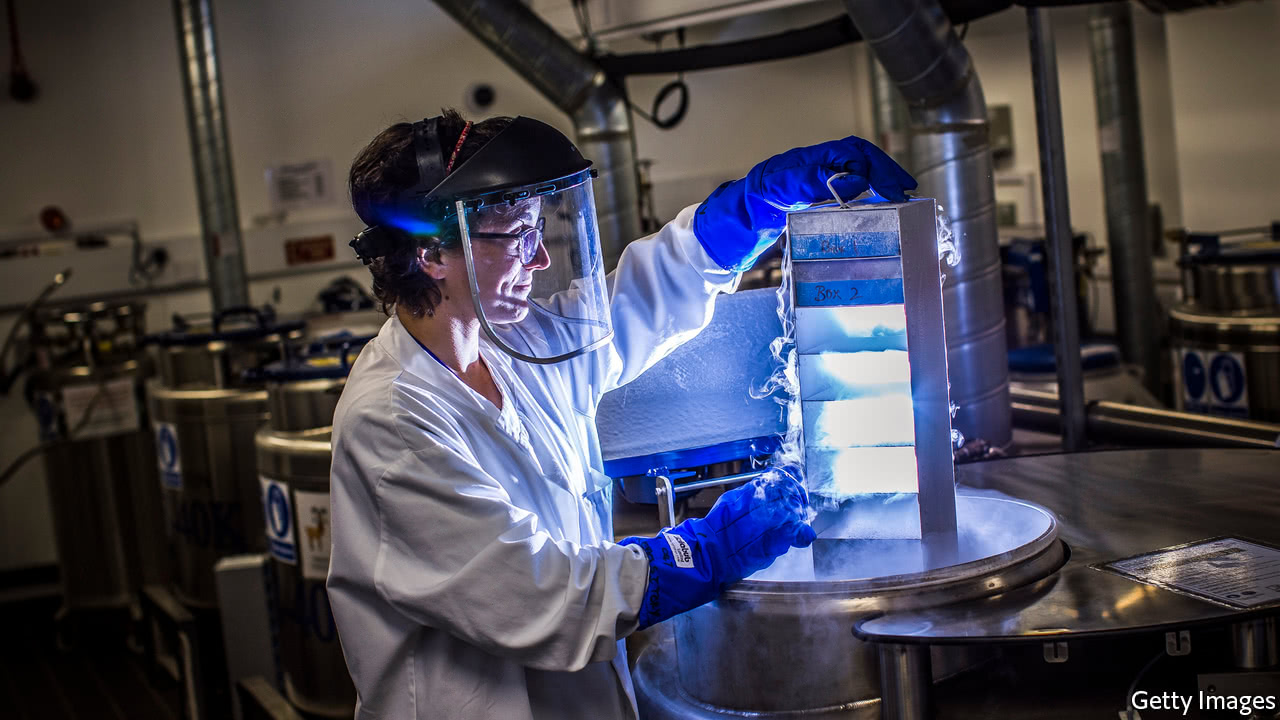
CANCER is a grim sort of growth market. By 2030 there will be over 22m new cases a year, up from 14m in 2012, according to the International Agency for Research on Cancer. But as the world marks World Cancer Day, on February 4th, scientists are speaking of a revolution in the battle to beat it. Money managers’ ears have pricked up. Oncology investing is “hot”.
The most straightforward way to invest in treating cancer is through shares in companies that sell blockbuster drugs. Alternatively, biotech indices track a basket of companies, of which typically 40% are oncology-related. Big Pharma now buys rather than builds much of its innovation. So backing oncology startups can be an especially lucrative (if risky) approach. According to CB Insights, a research firm, equity investment in cancer-therapeutics startups has grown from $2bn in 2013 to $4.5bn in 2017. Take Juno Therapeutics, founded in Seattle in 2013 to develop immunotherapy drugs. It was acquired on January 22nd by Celgene, a Biotech giant, for a whopping $9bn.
Eric...Continue reading
from Economics http://ift.tt/2DTTtnn
via https://ifttt.com/ IFTTT
A big Blackstone deal shows how private equity has changed
THE financial crisis a decade ago brought the glory days of private equity to a screeching halt. The debt-fuelled megadeals on which the industry had built its fame (or notoriety) seemed over. But on January 30th a group of investors led by Blackstone, the world’s largest private-equity firm, announced a $17bn deal to carve out Thomson Reuters’ financial and risk business (F&R), a financial-data provider. The deal would be Blackstone’s largest since the crisis. But if the megadeal is making a comeback, it is in a new guise.
In the mid-2000s, huge transactions abounded. Deals from 2006 and 2007 alone account for nine of the ten largest ever. But, looking purely at value, the only true drought in big deals was from 2008-12. Every year since 2013 has seen at least one buy-out of more than $10bn, according to the private-equity database of Thomson Reuters F&R itself.
But in many of these deals private-equity firms have taken the unfamiliar role of companions to corporate acquirers. In a $23.5bn deal in 2013 to acquire Heinz, Berkshire Hathaway, a conglomerate, split ownership equally with 3G Capital, a Brazilian private-equity firm. Even private-equity led acquisitions are today much more likely to involve institutional investors or corporations, rather than other private-equity firms. The consortium that Bain Capital cobbled together last year...Continue reading
from Economics http://ift.tt/2ny7EDs
via https://ifttt.com/ IFTTT
A safe asset is devised for the euro zone

THESE are bright days in the euro area. Preliminary figures say that the currency zone’s GDP grew by 2.5% last year, the fastest since 2007. But many of the faultlines in the zone’s financial system, as revealed by the financial crisis, remain. A proposal published on January 29th by a group reporting to the European Systemic Risk Board, a prudential supervisor, may mend one of the more troubling flaws.
Euro-area banks favour their home countries’ debt. A sample of 76 lenders examined by supervisors last year had exposures of €1.7trn ($1.9trn) to euro-area governments, of which €1.1trn was lent to their home states. That exceeded the banks’ common equity tier-1 capital, their cushion against losses, of €1trn. The fortunes of states and banks are thus bound in a “doom loop”. Suppose an economic shock raises the risk of a sovereign default. Banks’ balance-sheets start to crumble. They need propping up by the already wobbly state. And as they cut lending, the real economy weakens,...Continue reading
from Economics http://ift.tt/2DRTh8d
via https://ifttt.com/ IFTTT
“Factor investing” gains popularity

RETAIL investors tend to dream of finding a wonder stock—a Netflix or Apple that will multiply their savings many times over. But institutional investors cannot commit too much capital to one individual company. Instead, they hope to pick the right kind of stocks, a broadly based group that will beat the market.
Two or three decades ago, fund managers would have attempted this feat by favouring one industry over another. They might, say, have bought energy stocks in the hope that the oil price would rise, while avoiding retailers because of fears about consumer spending. But in these days of computers and algorithms, there are more systematic approaches to beating the market. The aim is to find stocks with characteristics or “factors” that make them outperform. In the industry jargon, funds tracking these factors are known as “smart beta”. The money allocated to smart-beta exchange-traded funds has reached $658bn; all told, more than $1trn is invested in an explicitly factor-based...Continue reading
from Economics http://ift.tt/2ntZ2yw
via https://ifttt.com/ IFTTT
Why sub-zero interest rates are neither unfair nor unnatural

DENMARK’S Maritime Museum in Elsinore includes one particularly unappetising exhibit: the world’s oldest ship’s biscuit, from a voyage in 1852. Known as hardtack, such biscuits were prized for their long shelf lives, making them a vital source of sustenance for sailors far from shore. They were also appreciated by a great economist, Irving Fisher, as a useful economic metaphor.
Imagine, Fisher wrote in “The Theory of Interest” in 1930, a group of sailors shipwrecked on a barren island with only their stores of hardtack to sustain them. On what terms would sailors borrow and lend biscuits among themselves? In this forlorn economy, what rate of interest would prevail?
One might think the answer depends on the character of the unfortunate sailors. Interest, in many people’s minds, is a reward for deferring gratification. That is one reason why low interest rates are widely perceived as unjust. If an abstemious sailor were prepared to lend a biscuit to his crewmate rather than...Continue reading
from Economics http://ift.tt/2BKdbfl
via https://ifttt.com/ IFTTT
Zhou Xiaochuan, China’s central-bank chief, is about to retire

WHEN Zhou Xiaochuan took the helm of China’s central bank 15 years ago, the world was very different. China had just joined the World Trade Organisation and its economy was still smaller than Britain’s. Foreign investors paid little heed to the new governor of the People’s Bank of China. He seemed safe to ignore: another black-haired, bespectacled official whose talk was littered with socialist bromides.
Mr Zhou is widely expected to retire in the coming weeks. He leaves with China far stronger and his own role much more prominent. No one person can take credit for the flourishing economy. But Mr Zhou, who is 70, deserves more than most. He helped forge the monetary environment for China’s growth. He also went a long way to dragging the financial system out of the mire of central planning, even if reforms fell short of his own wishes.
His achievements are surprising. China makes no pretence of having an independent central bank. The People’s Bank is under the State Council, or...Continue reading
from Economics http://ift.tt/2nugu5W
via https://ifttt.com/ IFTTT
The dollar keeps weakening. Is that good news for the world?
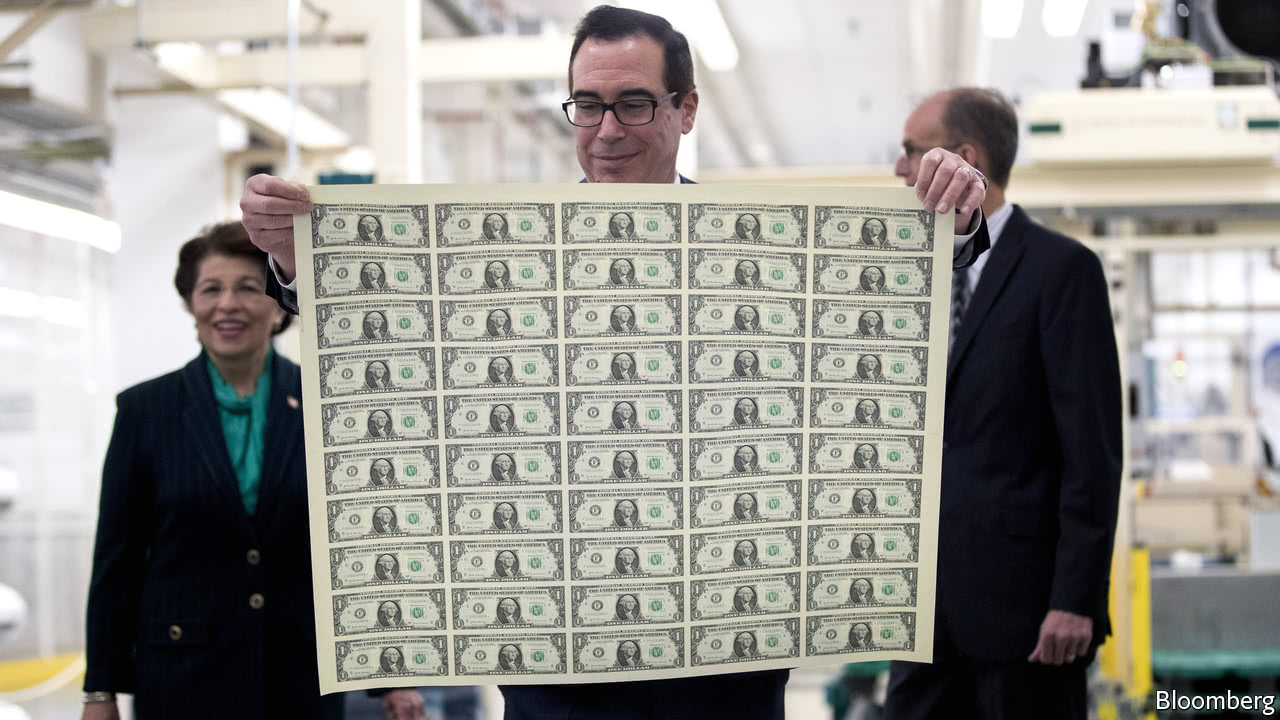
AT THE start of 2017, just before Donald Trump was inaugurated as president, a survey of fund managers by Bank of America Merrill Lynch (BAML) found they believed that being positive on the dollar was “the most crowded trade”. It turned out they were right to be cautious. On a trade-weighted basis, the currency has fallen by 9% against other major currencies in the past year.
It is not clear what the Trump administration thinks about this. At the recent World Economic Forum in Davos, Steven Mnuchin, the treasury secretary, said: “Obviously a weak dollar is good for us as it relates to trade and opportunities.” Although the rest of his statement was more nuanced, it is unusual for anyone in his position to depart from a “strong dollar” line. The greenback duly fell in price.
Mr Trump then followed up with a statement in favour of a strong dollar in the long term, which caused a rebound. Since it was only last April that the president talked about the dollar being...Continue reading
from Economics http://ift.tt/2nwmpa8
via https://ifttt.com/ IFTTT
5G Coming Sooner, But Who Will Reap Benefits?
Silicon Valley companies have reaped most of the benefits of the smartphone revolution, leaving network builders and operators running to stand still. It seems unfair, but the 5G era might not be any different.
from WSJ.com: Markets http://ift.tt/2DSv9C9
via https://ifttt.com/ IFTTT
from WSJ.com: Markets http://ift.tt/2DSv9C9
via https://ifttt.com/ IFTTT
How Alibaba Built Its Way to Record Sales
China’s e-commerce giant Alibaba delivered another record quarter, though investors should worry about how it got there.
from WSJ.com: Markets http://ift.tt/2nx8Vut
via https://ifttt.com/ IFTTT
from WSJ.com: Markets http://ift.tt/2nx8Vut
via https://ifttt.com/ IFTTT
AT&T Investors Are Skipping to the Courthouse
Next month AT&T faces a daunting trip to court, but shareholders are starting February off with a spring in their step.
from WSJ.com: Markets http://ift.tt/2DT9tGn
via https://ifttt.com/ IFTTT
from WSJ.com: Markets http://ift.tt/2DT9tGn
via https://ifttt.com/ IFTTT
Big Oil Finds Going Green Is Hard to Do
Oil majors like Royal Dutch Shell, which just reported strong results, are moving more decisively into gas and green energy. It’s a strategy that is likely to pay off in the long run, but it could be bumpy along the way.
from WSJ.com: Markets http://ift.tt/2nwFbxP
via https://ifttt.com/ IFTTT
from WSJ.com: Markets http://ift.tt/2nwFbxP
via https://ifttt.com/ IFTTT
How to Get Help With a Stock Buyback: Ask Blackstone
Thomson Reuters is selling a majority stake in its declining terminals business, but the deal isn’t straightforward.
from WSJ.com: Markets http://ift.tt/2noxmez
via https://ifttt.com/ IFTTT
from WSJ.com: Markets http://ift.tt/2noxmez
via https://ifttt.com/ IFTTT
No Bill Yet for Facebook's Fixes
The social network’s changes slow user growth but financials stay strong.
from WSJ.com: Markets http://ift.tt/2GzJG3u
via https://ifttt.com/ IFTTT
from WSJ.com: Markets http://ift.tt/2GzJG3u
via https://ifttt.com/ IFTTT
Wednesday, 31 January 2018
What Should the Fed Do When No One Listens?
Investors are ignoring the Federal Reserve. That could make the Fed’s job more complicated.
from WSJ.com: Markets http://ift.tt/2DSH4w4
via https://ifttt.com/ IFTTT
from WSJ.com: Markets http://ift.tt/2DSH4w4
via https://ifttt.com/ IFTTT
Will Insurers Follow Chubb's Lead to Recovery?
Evan Greenberg, chief executive of insurance giant Chubb, is a man on a mission. For the past few months he has been pounding the table for higher pricing in property and casualty insurance to improve returns across the industry.
from WSJ.com: Markets http://ift.tt/2DP9Wck
via https://ifttt.com/ IFTTT
from WSJ.com: Markets http://ift.tt/2DP9Wck
via https://ifttt.com/ IFTTT
Subscribe to:
Posts (Atom)