Struggling camera maker’s failed efforts at diversification leave investors with little to hang on.
from WSJ.com: Markets http://ift.tt/2CUc3KG
via https://ifttt.com/ IFTTT
Monday, 8 January 2018

Why Everything Is Still Awesome in Global Markets
The calendar has rolled over but global markets are still thriving on the 2017 playbook. That means that big questions over why growth and inflation are so out of whack with each other remain unanswered.
from WSJ.com: Markets http://ift.tt/2maeVcf
via https://ifttt.com/ IFTTT
from WSJ.com: Markets http://ift.tt/2maeVcf
via https://ifttt.com/ IFTTT
The Price Gap That's Squeezing the Auto Market
The widening difference in prices between new and used cars augers pain for auto-makers profits in the U.S.
from WSJ.com: Markets http://ift.tt/2CPDcyB
via https://ifttt.com/ IFTTT
from WSJ.com: Markets http://ift.tt/2CPDcyB
via https://ifttt.com/ IFTTT
The High Stakes in the Looming Fannie and Freddie Overhaul
A decade after the collapsing housing market led to a dramatic bailout of Fannie Mae and Freddie Mac, Congress is gearing up to tackle the politically thorny issue of housing finance reform in 2018.
from WSJ.com: Markets http://ift.tt/2m9lZFX
via https://ifttt.com/ IFTTT
from WSJ.com: Markets http://ift.tt/2m9lZFX
via https://ifttt.com/ IFTTT
China's Electric Car Market Has Grown Up
Beijing has offered the electric car market plenty of support, but there now appears to be solid demand from consumers to go green. That should give confidence to investors in the sector.
from WSJ.com: Markets http://ift.tt/2mc2UDC
via https://ifttt.com/ IFTTT
from WSJ.com: Markets http://ift.tt/2mc2UDC
via https://ifttt.com/ IFTTT
Saturday, 6 January 2018
Finally, a Brighter Outlook for Wages
Rising wages have been one important missing element of the economic expansion. Now there is evidence worker pay will start to pick up.
from WSJ.com: Markets http://ift.tt/2CvfpjU
via https://ifttt.com/ IFTTT
from WSJ.com: Markets http://ift.tt/2CvfpjU
via https://ifttt.com/ IFTTT
Cooling Ardor for Flashy Smartphones Spells Trouble for Suppliers
Consumers seem less willing to shell out for pricey phones. That means bad weather ahead for Asian companies who make their components.
from WSJ.com: Markets http://ift.tt/2CXlRRI
via https://ifttt.com/ IFTTT
from WSJ.com: Markets http://ift.tt/2CXlRRI
via https://ifttt.com/ IFTTT
Friday, 5 January 2018
How states may try to circumvent Republicans’ tax reform

DEMOCRATS usually lament efforts by the rich to avoid paying taxes. Yet the bill President Donald Trump signed into law on December 22nd may spur Democratic-leaning states to concoct such schemes. The reform capped at $10,000 the deduction, from federally taxable income, of state and local taxes (the “SALT” deduction). As a result, those who pay large local levies are likely to pay more federal tax in 2018. The change is particularly bad for high-earners living in big houses in states like New York and California, which impose high taxes. These states—which tend to see the reform as Republicans shaking down their political opponents—may yet put up some resistance.
Just under one-in-three taxpayers made use of the SALT deduction in 2015. On average, they knocked about $12,500 off their federally taxable income, according to the Government Finance Officers Association—only a little above the new cap. Yet the deduction has been much more valuable than that to some. Those earning...Continue reading
from United States http://ift.tt/2qlumU9
via https://ifttt.com/ IFTTT
What Congress forgot to do
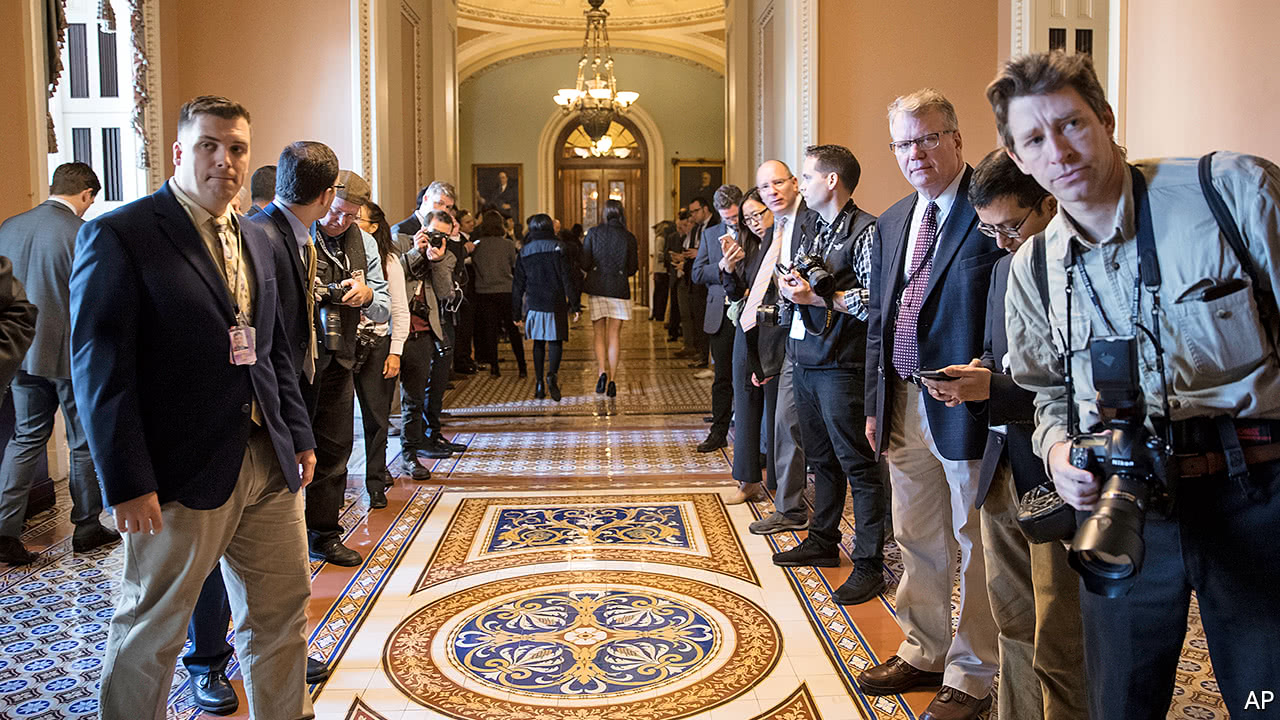
BLAME it on the sand traps: President Donald Trump returned to work after seven straight days of golf enraged. Even by his own standards, his Twitter fury on January 2nd was extraordinary. The president boasted that he has a “much bigger” nuclear button than North Korea’s despotic ruler, Kim Jong Un; announced a mysterious “MOST DISHONEST & CORRUPT MEDIA AWARDS” event and called, on a whim, for a political rival to be jailed.
The next day excerpts from a forthcoming book on the Trump campaign began to circulate. In one juicy nugget, Steve Bannon, the chief of that victorious campaign, described a meeting that Donald Trump junior and Jared Kushner held in Trump Tower with a Russian national offering help as “treasonous”. Don junior would “crack like an egg” under the pressure of the investigation into election meddling, Mr Bannon supposedly said. Cue fury from the president, who said Mr Bannon had “lost his mind” and...Continue reading
from United States http://ift.tt/2qw2rkv
via https://ifttt.com/ IFTTT
Should voters who don’t vote stay on voter rolls?

POLITICAL apathy worried Jean-Jacques Rousseau. In a healthy republic, he wrote in “The Social Contract” in 1762, citizens “fly to the assemblies” and take an active role in public affairs. He would frown on America’s voter turnout, which hovers at 40% for mid-term elections and seldom goes much higher than 55% for a presidential race. But he might have been even more alarmed by laws that sideline infrequent voters from politics.
On January 10th a rule that has disenfranchised hundreds of thousands of Ohioans comes under the Supreme Court’s microscope. Husted v Philip Randolph Institute concerns what the League of Women Voters and the Brennan Centre for Justice calls the most restrictive approach to winnowing voter rolls found anywhere in America. Since 1994, in addition to nixing people who have died or moved—which all states do—Ohio has sent a postcard to voters who have not voted for two years. If they fail to return the address confirmation and then miss...Continue reading
from United States http://ift.tt/2m2Lqtw
via https://ifttt.com/ IFTTT
Blue-state Republicans could become almost as rare as white southern Democrats

“I OPERATE under the principle of justified optimism,” says Deep Sran, as he shows off the school he founded—based, he says, on his reading of Plato’s “Republic”. If voters elected representatives based on their CVs, Mr Sran would cakewalk into Congress. A lawyer with a doctorate in human development-turned teacher and entrepreneur, Mr Sran is the son of immigrants, raised in the suburbs of Washington, DC. He is one of 11 Democrats champing at the bit to replace Barbara Comstock, a Republican who has represented Virginia’s diverse, wealthy 10th congressional district for two terms. She is one of 23 Republicans representing districts that Hillary Clinton won in 2016. Democrats think they can flip them all, and more: the Democratic Congressional Campaign Committee (DCCC) has 91 districts in its sights, the lion’s share of them in states that Mrs Clinton won or barely lost.
They are, of course, unlikely to win them all. But an upset election, as this year’s midterms in November could...Continue reading
from United States http://ift.tt/2lVVcxj
via https://ifttt.com/ IFTTT
Life expectancy in America has declined for two years in a row
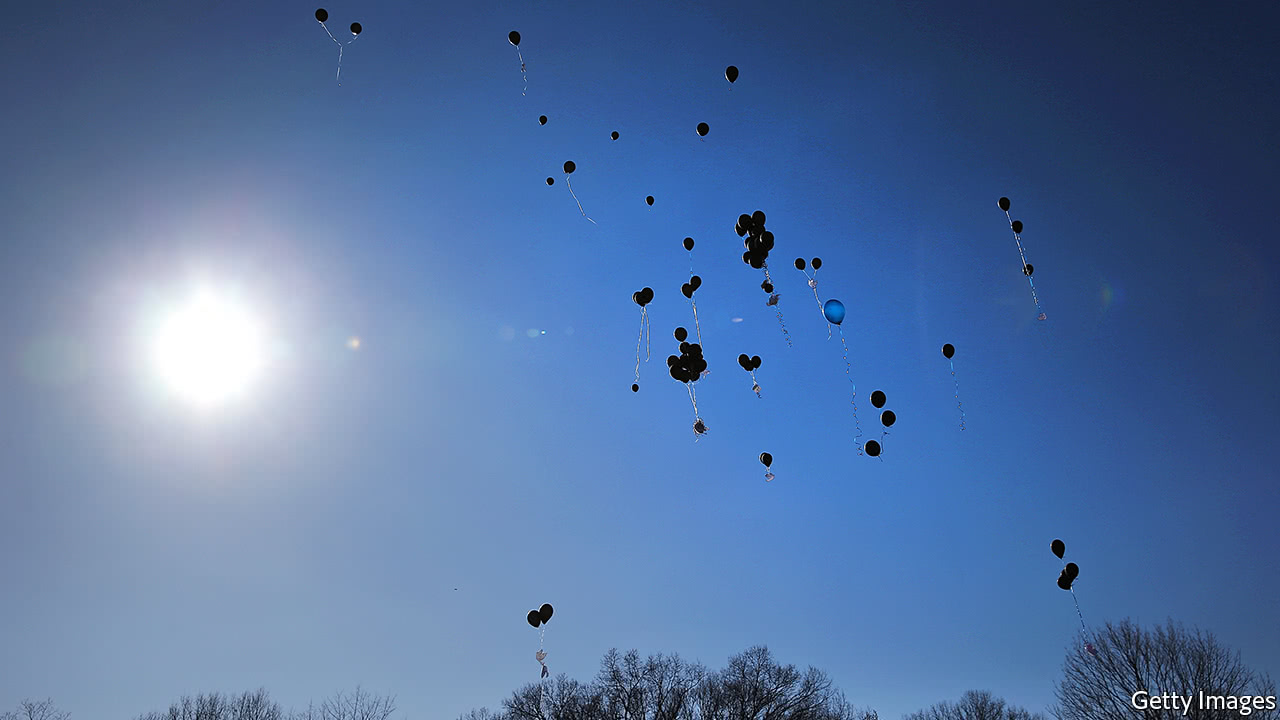
JUST as Americans headed home for the year-end holidays, the Centres for Disease Control and Prevention (CDC) issued its annual report on mortality—which had no news to celebrate. According to the report, published on December 21st, life expectancy in America fell in 2016, for the second year in a row. An American baby born in 2016 can expect to live on average 78.6 years, down from 78.9 in 2014. The last time life expectancy was lower than in the preceding year was in 1993. The last time it fell for two consecutive years was in 1962-63.
Other statistics suggest that this alarming trend is caused by the epidemic of addiction to opioids, which is becoming deadlier. Drug overdoses claimed more than 63,000 lives in 2016. Two-thirds of these deaths were caused by opioids, including potent synthetic drugs such as fentanyl and tramadol, which are easier to overdo by accident and are becoming more popular among illegal drug users.
According to the CDC, the leading causes of death in 2016...Continue reading
from United States http://ift.tt/2m3iFNf
via https://ifttt.com/ IFTTT
Drug Industry Is Ripe for a Wave of Deals
Big pharma and biotech aren’t benefiting as much from higher drug prices. That raises the possibility of large deals.
from WSJ.com: Markets http://ift.tt/2lXBkZX
via https://ifttt.com/ IFTTT
from WSJ.com: Markets http://ift.tt/2lXBkZX
via https://ifttt.com/ IFTTT
Now Italy Is Growing, Can It Lighten Its Huge Debt Load?
Italy, Europe’s most indebted large economy, is at the crossroads again. Growth has picked up finally, and the country’s bank cleanup is in progress. But the national election due in early March puts the country’s debt back in focus.
from WSJ.com: Markets http://ift.tt/2CJcIj3
via https://ifttt.com/ IFTTT
from WSJ.com: Markets http://ift.tt/2CJcIj3
via https://ifttt.com/ IFTTT
As China gets tough on pollution, will its economy suffer?
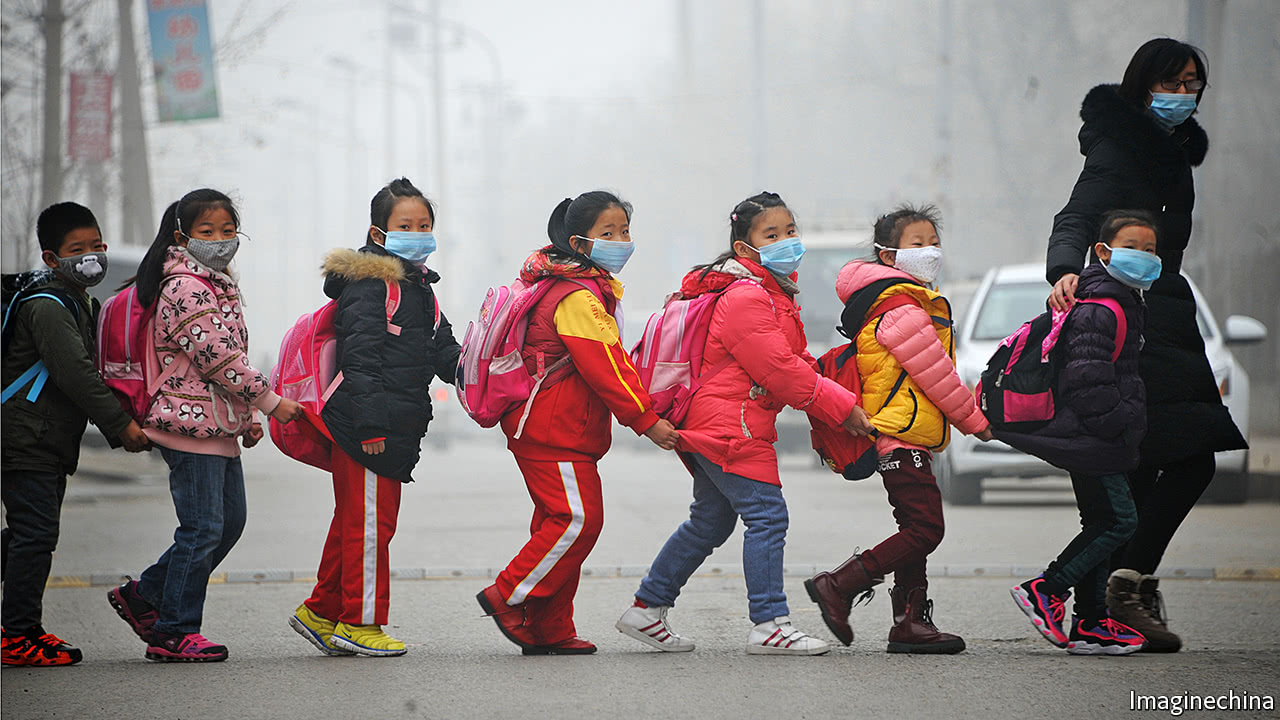
LEO YAO thought he had nothing to fear from the environment ministry. Before, when its inspectors visited his cutlery factory, he says, they generated “loud thunder, little rain”. After warning him to clean up, they would, at worst, impose a negligible fine. Not so this time. In August dozens of inspectors swarmed over his workshop in Tianjin, just east of Beijing, and ordered production to be halted. His doors remain shut today. If he wants to go on making knives and forks, he has been told that he must move to more modern facilities in a less populated area.
Mr Yao’s company, which at its peak employed 80 people, is just one minor casualty in China’s sweeping campaign to reduce pollution. For years the government has vowed to go green, yet made little progress. It has flinched at reining in dirty industries, wary of the mass job losses that seemed likely to ensue. But in the past few months it has taken a harder line and pressed on with pollution controls, hitting coalminers,...Continue reading
from Economics http://ift.tt/2lTbI0k
via https://ifttt.com/ IFTTT
Europe’s sprawling new financial law enters into force
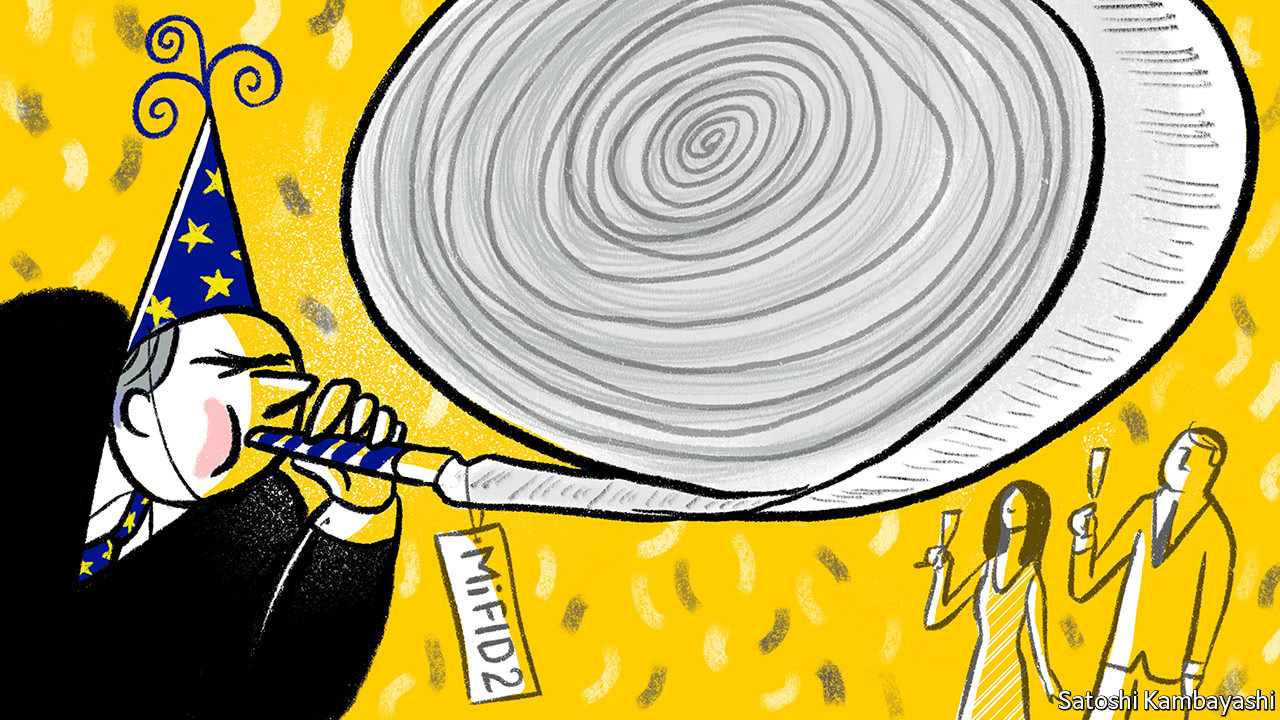
AFTER years of rule-drafting, industry lobbying and plenty of last-minute wrangling, Europe’s massive new financial regulation, MiFID 2, was rolled out on January 3rd. Firms had spent months dreading (in some cases) or eagerly awaiting (in others) the “day of the MiFID” when the law’s new reporting requirements would enter into force. One electronic-trading platform, Tradeweb, even gave its clients a “MiFID clock” to count down to it.
Apprehension was understandable. The new EU law, the second iteration of the Markets in Financial Instruments Directive (its full, unwieldy name), affects markets in everything from shares to bonds to derivatives. It seeks to open up opaque markets by forcing brokers and trading venues to report prices publicly, in close to real time for those assets deemed liquid. It also requires them to report to regulators up to 65 separate data points on every trade, with the aim of avoiding market abuse.
The changes are greatest for markets, like those in...Continue reading
from Economics http://ift.tt/2CEuLG7
via https://ifttt.com/ IFTTT
America’s bank profits take a hit from tax reform

WHEN Donald Trump won America’s presidential election 14 months ago, banks’ share prices leapt. One reason for that was the prospect of lower corporate taxes, which would both benefit banks directly and (investors hoped) ginger up the economy. Like Mr Trump’s legislative agenda, their shares were becalmed for much of 2017, but they perked up late in the year when the Tax Cuts and Jobs Act looked likely to become law—as it duly did when the president signed it on December 22nd.
Yet several banks expect the act to make deep dents in fourth-quarter profits. On December 28th Goldman Sachs said it was braced for a $5bn hit. A week before, Bank of America (BofA) announced a $3bn write-down. Early in the month, on fairly accurate assumptions about the law’s final form, Citigroup put the cost at a whopping $20bn. Foreign banks are also assessing the damage: £1bn ($1.4bn), says Barclays; SFr2.3bn ($2.4bn), reckons Credit Suisse.
These one-off hits have two main causes....Continue reading
from Economics http://ift.tt/2lTbUwA
via https://ifttt.com/ IFTTT
Many happy returns: new data reveal long-term investment trends

DATA-GATHERING is the least sexy part of economics, which is saying something. Yet it is also among the most important. The discipline is rife with elaborate theories built on assumptions that turned out to be false once someone took the time to pull together the relevant data. Accordingly, one of the most valuable papers produced in 2017 is an epic example of data-retrieval: a piece of research that spells out the rates of return on important asset classes, for 16 advanced economies, from 1870 to 2015. It is fascinating work, a rich seam for other economists to mine, and a source of insight into some of today’s great economic debates.
Rates of return both influence and are influenced by the way firms and households expect the future to unfold. They therefore find their way into all sorts of economic models. Yet data on asset returns are incomplete. The new research, published as an NBER working paper in December 2017, fills in quite a few gaps. It is the work of five economists: Òscar Jordà of the...Continue reading
from Economics http://ift.tt/2CE0cjG
via https://ifttt.com/ IFTTT
A bond dispute threatens the future of Islamic finance
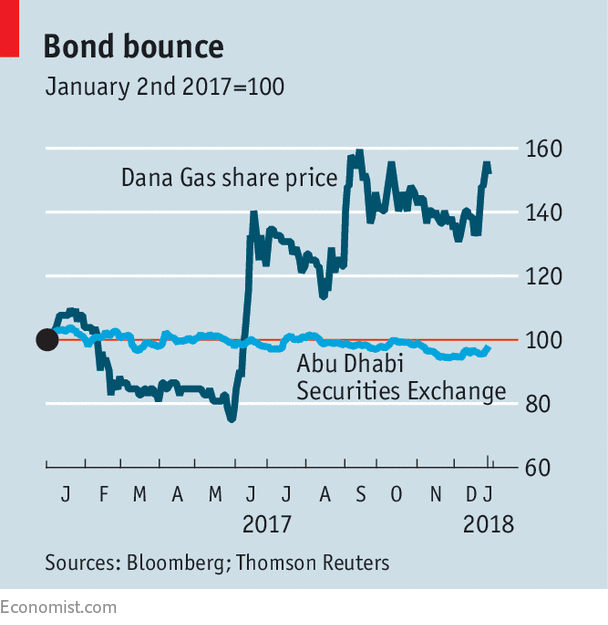
STOCKMARKETS in the Gulf do not observe Christian holidays, but still had a generally quiet day on December 25th. Shares in Dana Gas, an exploration business listed in Abu Dhabi, however, did make some noise, leaping by 13.2% on Christmas Day, to complete a buoyant six months for the stock (see chart). The surge may owe something to the company’s recent arbitration victory against the regional government of Iraqi Kurdistan, over $2bn it and its consortium partners are owed in overdue payments. But it also hints at shareholders’ belief that Dana will not be forced soon to satisfy its own creditors. They have been up in arms since the firm refused to honour a $700m Islamic bond, or sukuk, that matured in October.
Dana says it has received legal advice that the security no longer complies with sharia, the body of Koranic law, and so the bond is “unlawful” in the United Arab Emirates (UAE). In July, facing liquidity difficulties, it stopped redeeming...Continue reading
from Economics http://ift.tt/2lSBm5f
via https://ifttt.com/ IFTTT
After a bumper 2017, will 2018 be kind to the financial markets?
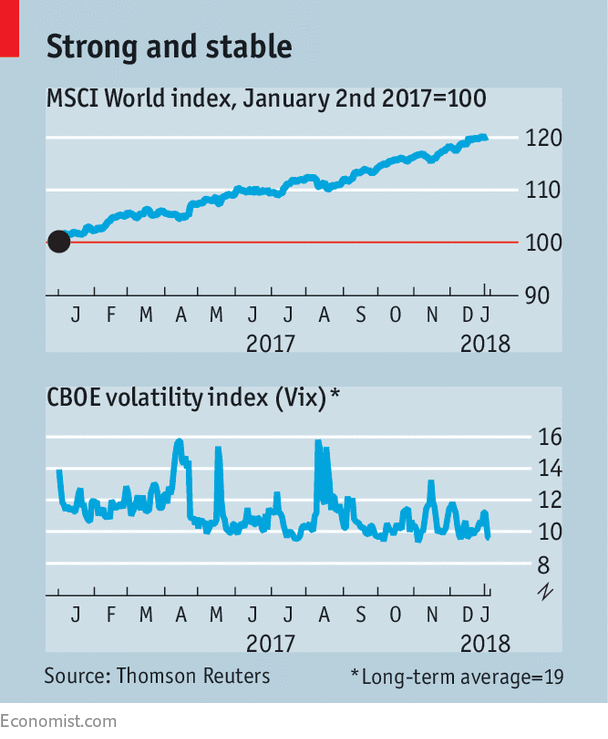
AFTER a bumper year for financial markets in 2017, can 2018 be anything like as good? Much will depend on the global economy. The rally in stockmarkets stretches back almost two years, to the point when worries about an era of “secular stagnation” started to diminish.
The first pieces of economic data to be published in January—the purchasing managers’ indices (PMI) for the manufacturing sector—were pretty upbeat. In the euro zone the index recorded its highest level since the survey began in 1997. China’s PMI was stronger than expected, and America’s index showed new orders at their highest level in nearly 14 years.
The obvious question is whether the markets have anticipated the good news about growth, and pushed share prices to a level from which returns can only be disappointing. The cyclically adjusted price-earnings ratio of the American market, which uses a ten-year average of profits, is 32.4; it has been higher only in September 1929 (just before the Wall Street crash)...Continue reading
from Economics http://ift.tt/2CByvYR
via https://ifttt.com/ IFTTT
The Dow Has What Investors Want
The Dow Jones Industrial Average has done very well lately, with a total return of 27% since the end of 2016, versus 24% for the S&P 500. And that has less to do with the quirk of how the Dow is constructed than what is in it.
from WSJ.com: Markets http://ift.tt/2CrTryd
via https://ifttt.com/ IFTTT
from WSJ.com: Markets http://ift.tt/2CrTryd
via https://ifttt.com/ IFTTT
Chip Flaw Exposes Intel's Long-Term Challenges
Chip giant’s near-term business is unlikely to be hurt by vulnerabilities, but further out is a question.
from WSJ.com: Markets http://ift.tt/2CTN33U
via https://ifttt.com/ IFTTT
from WSJ.com: Markets http://ift.tt/2CTN33U
via https://ifttt.com/ IFTTT
Disasters Don't Whip Up Insurance Pricing Power
Global insurers suffered one of the worst ever years for catastrophe claims in 2017. Yet the reinsurers that backstop the industry’s worst losses are still struggling to lift prices.
from WSJ.com: Markets http://ift.tt/2CpcUzB
via https://ifttt.com/ IFTTT
from WSJ.com: Markets http://ift.tt/2CpcUzB
via https://ifttt.com/ IFTTT
Taxes and the Terrible, No Good Fourth-Quarter Earnings Season
Hefty expenses companies will record as a result of the tax plan will hit fourth-quarter trend hard, even as the tax law gives a big long-term boost to corporate profits.
from WSJ.com: Markets http://ift.tt/2CSt5GL
via https://ifttt.com/ IFTTT
from WSJ.com: Markets http://ift.tt/2CSt5GL
via https://ifttt.com/ IFTTT
Thursday, 4 January 2018
A campaign against “grossophobie” in France

FRANCE has only a few plump heroes, real or imagined. There was King Louis the Fat, who ruled from 1108 to 1137, pacified unruly barons, centralised power and won several wars. Gargantua, a giant created by François Rabelais, drank the milk of 17,913 cows each day. Gérard Depardieu (pictured), France’s best-known modern actor, is hefty enough to play Obelix, France’s best-known overweight cartoon Gaulish warrior, on the screen.
In general, however, the French see themselves as gourmets, not gourmands. And indeed they are thinner than people in most other rich countries: only 15.3% of them are obese, compared with an OECD average of 19.5%. Worryingly, though, this has risen from less than 6% in 1990, while the share of adults who are overweight has risen from 30% to over 46%. Growing appetites for processed food and more sedentary lives are leading to bigger waistlines.
For policymakers, this is a problem. Obesity leads to...Continue reading
from Europe http://ift.tt/2qmyrHM
via https://ifttt.com/ IFTTT
Spain grapples with a new Catalonian problem

AFTER his final cabinet meeting of 2017 Mariano Rajoy, Spain’s prime minister, admitted that it had been “an extraordinarily difficult year”. The economy purred along, unemployment and the deficit are falling, but there was a shadow, he said: the “instability generated by politics in Catalonia”. The problem is that the outcome of last month’s snap election in Spain’s rebellious north-eastern region suggests that 2018 may not be much easier.
The election was called by Mr Rajoy in October after he assumed extraordinary constitutional powers to suspend self-government in Catalonia after a unilateral declaration of independence issued by the separatist regional administration headed by Carles Puigdemont. That in turn came after an unconstitutional independence referendum, which was further marred by police violence.
The contest took place in bizarre circumstances, with Mr Puigdemont campaigning by video link from Brussels, where he had fled to avoid a charge of rebellion. With...Continue reading
from Europe http://ift.tt/2lVm0hr
via https://ifttt.com/ IFTTT
Young Italians are fed up with the traditional political parties

FOR the first time in its brief history, Italy’s maverick Five Star Movement (M5S) is going into a general election campaign as the front-runner. On December 28th President Sergio Mattarella dissolved parliament, clearing the way for a vote on March 4th. The latest polls give the M5S, which advocates direct, internet-based democracy and a hotch-potch of left- and right-wing policies, a lead of more than three points over the centre-left Democratic Party (PD), the dominant partner in Paolo Gentiloni’s coalition government. The inexperienced M5S, founded less than nine years ago, could thus get first crack at forming a government—a prospect that troubles markets already worried by Italy’s huge public debt (132% of GDP at the end of 2016).
Like other populist groups in Europe, the M5S thrives on frustrated expectations. In Italy disillusion is most intense among the young and educated. Two-and-a half years after graduating, Valentina Fatichenti works six months in every 12 helping students at...Continue reading
from Europe http://ift.tt/2qmLYih
via https://ifttt.com/ IFTTT
Turkey’s economy is one of the world’s fastest-growing

THESE have been testing times for Emin Taha and his Turkish transport company. The war against the so-called Islamic State has reduced much of Mosul, Iraq’s second city and a big market for Turkish goods, to rubble. Trade with Iraqi Kurdistan ground to a halt when the federal government in Baghdad reacted furiously to an independence referendum in September. (It deployed troops to the contested city of Kirkuk, seized the nearby oilfields and closed Kurdish airspace to international flights.) Mr Taha, whose company relies on trade with Iraq for the bulk of its revenues, refused to give up. “We told our customers not to worry, to keep selling to Iraq, and that we would stand by them,” he says. A 20m lira ($5m) loan backed by Turkey’s credit guarantee fund (KGF) helped the company regain its footing and complete work on a number of projects, including new warehouses in Iraq.
Like Mr Taha’s business, Turkey’s economy is doing surprisingly well. In the...Continue reading
from Europe http://ift.tt/2lTYYYf
via https://ifttt.com/ IFTTT
The sudden demise of Donald Trump’s voter-fraud commission
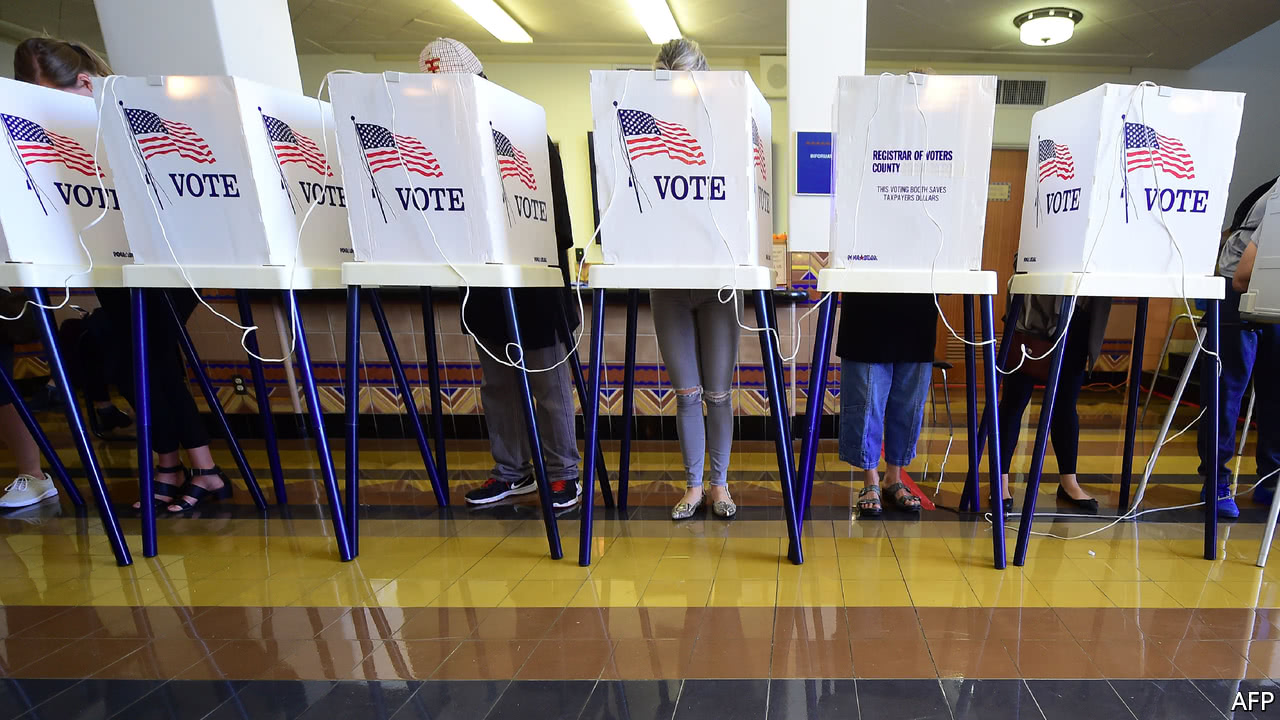
KRIS KOBACH of Kansas feels undeterred in his crusade to prove the persistence of widespread voter fraud—despite lacking any shred of evidence to support the claim. Even after Donald Trump abruptly announced on January 3rd that he would disband the White House’s advisory commission investigating voter fraud, which Mr Kobach has served as vice-chairman, he declared that this was merely “a change of tactics”. The commission’s work had been stymied by its opponents on the left, Mr Kobach explained. It made sense to transfer it to the Department of Homeland Security, he reasoned; its agents will be able to move faster and more efficiently than any presidential advisory commission.
Mr Kobach is trying hard to put a positive spin on the commission’s dissolution. In unvarnished reality, it must as a blow for the indefatigable voter-fraud conspiracy theorist, who is campaigning to become his state’s governor. For years he has been fixated on detecting voter fraud by “aliens”, as he refers to non-citizens. He even persuaded Sam...Continue reading
from United States http://ift.tt/2EU0D89
via https://ifttt.com/ IFTTT
Is the bubble only starting?

READY for a melt-up? Investors are generally upbeat about the prospects for equity markets this year but one intrepid fund manager thinks it is likely that American share prices could rise by 50% in the next six months to two years. Perhaps the biggest surprise is the identity of that pundit: Jeremy Grantham.
Mr Grantham, one of the founders of the fund management group GMO, is best known for a cautious approach to valuations. He was one of the investors who got out of the dotcom boom well before the top. His firm’s most recent prediction for seven-year returns are for an annual loss of 2% from American largecap equities; indeed among all the asset categories, only cash and emerging market equities and bonds and cash are expected to produce a positive real return over the seven-year period.
So how can Mr Grantham justify his views? He...Continue reading
from Economics http://ift.tt/2CQk5li
via https://ifttt.com/ IFTTT
Tesla's Model 3 Story Is Getting Old
The company’s news on delivery of its Model 3 sedans in the fourth quarter badly missed the mark and continued a history of company forecasts poor enough to be construed as misleading.
from WSJ.com: Markets http://ift.tt/2lQOjNM
via https://ifttt.com/ IFTTT
from WSJ.com: Markets http://ift.tt/2lQOjNM
via https://ifttt.com/ IFTTT
Wednesday, 3 January 2018
Why Does Shampoo Still Command a Stock-Market Premium?
Big consumer groups face disruption everywhere, except in the stock market, where their shares remain close to record highs. Chief executives woke up to the growth challenge in 2017. How long will investors keep the faith?
from WSJ.com: Markets http://ift.tt/2lQdK1m
via https://ifttt.com/ IFTTT
from WSJ.com: Markets http://ift.tt/2lQdK1m
via https://ifttt.com/ IFTTT
Alexei Navalny is excluded from Russia’s presidential poll

TWO leading politicians delivered their new year’s greetings to the Russian public this week. One was the president, Vladimir Putin, who has been in power for 18 years and is planning to stay for at least another six following an election due in March. The other was Alexei Navalny, the only truly independent opposition leader. He is also the person who poses the biggest challenge to Mr Putin, and has consequently been barred from standing. Both men were speaking using the Kremlin as a backdrop; but in Mr Navalny’s case, it was painted on a bit of cardboard.
The latter image carried a message: the upcoming election, in which only candidates approved by the Kremlin will be allowed to run, is a cartoon; and genuine politics are unfolding outside the castle’s walls and beyond its control. As part of this process Mr Navalny has called for a nationwide strike on January 28th to launch a boycott of the poll.
Neither Mr Navalny’s ban, announced on December 25th, nor his call for a...Continue reading
from Europe http://ift.tt/2qohQDx
via https://ifttt.com/ IFTTT
Utility Bid Is a Deal Maker's Delight
Dominion Energy’s bid for Scana comes partly at the expense of ratepayers and shareholders stung by a nuclear plant debacle.
from WSJ.com: Markets http://ift.tt/2CPxKsM
via https://ifttt.com/ IFTTT
from WSJ.com: Markets http://ift.tt/2CPxKsM
via https://ifttt.com/ IFTTT
Can Amazon Do With Clothes What It Did With Books?
Amazon.com is 24 years old but certainly isn’t acting its age. With its shares up 57% last year and a forward price to earning ratio of 276, the company looks more like a fast-growing teenager than an adult. Its biggest challenge is how to stay young.
from WSJ.com: Markets http://ift.tt/2CzBLUC
via https://ifttt.com/ IFTTT
from WSJ.com: Markets http://ift.tt/2CzBLUC
via https://ifttt.com/ IFTTT
How political leaders shape public opinion
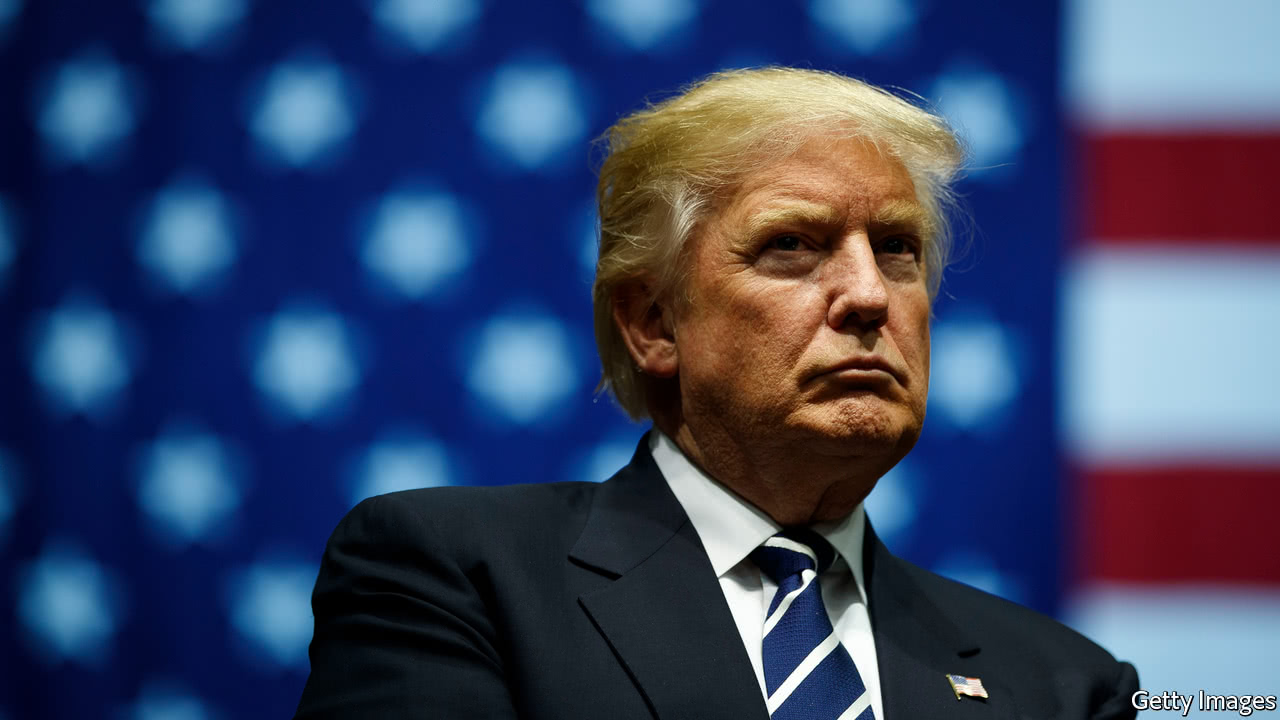
PRESIDENT Donald Trump’s use of Twitter has sparked much controversy among political commentators. Many regard the habit as reckless. Others believe that worrying about it is largely a distraction. But what is the effect of the president’s tweets on domestic politics? There are limits to the power of politicians’ statements to shift behaviour. However, as partisanship grows, committed members of political parties seem increasingly inclined to change their attitudes to match those of their parties’ leaders.
Research suggests that partisanship trumps other factors when people form political opinions. James Druckman, a political scientist from Northwestern University, looked with his colleagues at the comparative effect of substantive information and party endorsement on what to do with undocumented Americans who had arrived in the country as children. Substantive information changed both Democrats’ and Republicans’ opinions on the issue—some to more and some to less sympathetic positions—as long as they did not know their...Continue reading
from United States http://ift.tt/2E0uHO0
via https://ifttt.com/ IFTTT
The Golden State’s new pot laws are almost comically progressive

ON A hazy January morning, scores of cannabis enthusiasts queued outside MedMen’s elegant West Hollywood store to celebrate the first day they could legally purchase the drug without a medical licence. As they took their place behind a man covered in piercings and dragon tattoos, two women in Spandex leggings and designer sunglasses chatted about what they would buy. When, an hour later, they were invited in, they picked up a shopping basket and sought out a “budtender” to help them choose between marijuana flowers, THC-infused citrus soda, and cannabis chocolate. “My dad has really bad back pain,” one explained, as the pair stood in front of shelves displaying cannabis bath bombs, marijuana lotions and hemp-oil dog treats. “But he’s an old conservative white male. What can I buy him that won’t freak him out?”
California pioneered the legalisation of marijuana for medical use in 1996. But until this year the state’s cannabis industry has been largely unregulated. In...Continue reading
from United States http://ift.tt/2lQoDA3
via https://ifttt.com/ IFTTT
Why European Banks Will Struggle to Rally
U.S. bank stocks had a great run in 2017: Europeans, not so much. Those betting on a Continental banking catch-up in 2018 shouldn’t get their hopes up.
from WSJ.com: Markets http://ift.tt/2qf0oRH
via https://ifttt.com/ IFTTT
from WSJ.com: Markets http://ift.tt/2qf0oRH
via https://ifttt.com/ IFTTT
Ant-Moneygram's Demise Spells the End for China-U.S. Deal Making
CFIUS’s decision to block the proposed $1.2 billion deal shows that Beijing’s recent efforts to relax foreign investment rules aren’t going to meet with much reciprocity.
from WSJ.com: Markets http://ift.tt/2lM047l
via https://ifttt.com/ IFTTT
from WSJ.com: Markets http://ift.tt/2lM047l
via https://ifttt.com/ IFTTT
Which Banks to Own When Savers Get Fed Up
2018 will be the year that banks finally start paying decent returns to savers, but some will have to pay more than others
from WSJ.com: Markets http://ift.tt/2lIIzFI
via https://ifttt.com/ IFTTT
from WSJ.com: Markets http://ift.tt/2lIIzFI
via https://ifttt.com/ IFTTT
Tuesday, 2 January 2018
Protests have engulfed several cities in Iran

INCREDIBLY, religious hardliners may have started the protests that have spread across Iran. Preachers in Mashhad, Iran’s second city and a stronghold of the clerical regime, called their followers onto the streets on December 28th to protest against rising prices, most recently of eggs. Many of those who turned out supported Ebrahim Raisi, a conservative cleric, in the presidential election last May. “Death to Rouhani,” they chanted, referring to President Hassan Rouhani, whose liberal economic policies they oppose and whose budget in December called for sweeping subsidy cuts.
But their cries have been drowned out by a far broader swathe of Iranian malcontents. Even as the hardliners retreated, the protests spread to more than 20 cities, where Iranians of all stripes voiced pent-up anger over a lack of economic and political progress. The protests have also spread to Tehran, the capital, where hundreds of people have been arrested. After six days the tone of the rallies is...Continue reading
from Middle East and Africa http://ift.tt/2Cuck6V
via https://ifttt.com/ IFTTT
Europe's 2018 Challenge: Keeping the Good News Coming
The eurozone economy performed so well in 2017 that some analysts started using the term “Euroboom” unironically, while the euro strengthened and European stocks rose. The challenge for 2018 is to maintain momentum and avoid any setbacks that might damage the goodwill built up in 2017.
from WSJ.com: Markets http://ift.tt/2CsCjN3
via https://ifttt.com/ IFTTT
from WSJ.com: Markets http://ift.tt/2CsCjN3
via https://ifttt.com/ IFTTT
The Bright Side of Higher Treasury Yields
There could be serious problems in financial markets if long-term interest rates rise in 2018. There could be serious problems if they don’t.
from WSJ.com: Markets http://ift.tt/2DRdDKb
via https://ifttt.com/ IFTTT
from WSJ.com: Markets http://ift.tt/2DRdDKb
via https://ifttt.com/ IFTTT
George Weah, an ex-footballer, wins Liberia’s presidential election
AS THE only African football player to have been awarded both FIFA’s World Player of the Year and the Ballon d’Or, George Weah is used to winning. However, one prize had evaded him—until this year. On December 26th the former AC Milan and Paris St-Germain player triumphed in the second round of Liberia’s presidential election. With 98.1% of ballots counted, Mr Weah defeated the current vice-president, Joseph Boakai, with 61.5% of the vote. He won all but one of Liberia’s 15 counties.
Mr Weah’s victory is an important milestone for the nascent democracy. Liberia suffered two brutal civil wars between 1989 and 2003. An estimated 250,000 people died and perhaps 90% of the economy was wiped out. In 1997, during a period of peace, Charles Taylor, a warlord, became president. Supporters were known to chant, “He killed my ma, he killed my pa, but I’ll vote for him.”
When Mr Weah (pictured, in 2014) takes power in January, by contrast, it will be Liberia’s first peaceful transfer of power from one elected president to another since 1944. The run-off vote was delayed by a legal challenge to the first round of the election (in which Mr Weah came first with 38.4% of the vote to Mr Boakai’s 28.8%). The second round eventually proceeded with no violence, though turnout was only 56%, compared with 75.2% in the first round on October 10th.
...Continue reading
from Middle East and Africa http://ift.tt/2qbsjlB
via https://ifttt.com/ IFTTT
Games Growth Not a Given in China
Selling smartphone games in China has been one of the best businesses in the world in the past few years. But can the companies involved, like tech giant Tencent, keep hitting the high scores?
from WSJ.com: Markets http://ift.tt/2DNBdrs
via https://ifttt.com/ IFTTT
from WSJ.com: Markets http://ift.tt/2DNBdrs
via https://ifttt.com/ IFTTT
Monday, 1 January 2018
The Secret to Cutting China's Debt
The close relationship between China’s borrowing and exports means Beijing will still depend on global growth staying strong if it is to win its battle against excessive leverage.
from WSJ.com: Markets http://ift.tt/2lAYSna
via https://ifttt.com/ IFTTT
from WSJ.com: Markets http://ift.tt/2lAYSna
via https://ifttt.com/ IFTTT
Virtual Reality Needs to Cut the Cord
Virtual reality hasn’t really caught on with consumers yet because no one has come up with the right combination of hardware and content necessary to make it a must-have product. But the companies behind VR aren’t giving up.
from WSJ.com: Markets http://ift.tt/2lwIYv7
via https://ifttt.com/ IFTTT
from WSJ.com: Markets http://ift.tt/2lwIYv7
via https://ifttt.com/ IFTTT
Eight Things to Watch in Markets in 2018
The Wall Street Journal’s Heard on the Street team evaluates the year ahead in markets. Here’s what you should watch, from wages to technology to the Chinese economy.
from WSJ.com: Markets http://ift.tt/2qfjozF
via https://ifttt.com/ IFTTT
from WSJ.com: Markets http://ift.tt/2qfjozF
via https://ifttt.com/ IFTTT
Boeing's Next Airliner Might Fly Investors Into Turbulence
Boeing Co. was the Dow’s best performer in 2017, but investors could be right to worry about its plans to develop a new midsize airliner, which takes years and costs money.
from WSJ.com: Markets http://ift.tt/2EsD2uL
via https://ifttt.com/ IFTTT
from WSJ.com: Markets http://ift.tt/2EsD2uL
via https://ifttt.com/ IFTTT
Subscribe to:
Posts (Atom)